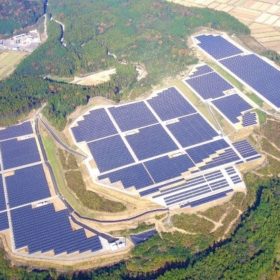
Japan’s struggle to drive down renewables costs
A nation famous for high electricity prices has seen power costs fall 15% this year, according to analyst Wood Mackenzie, a figure which will help attract $100 billion of solar and wind investment to 2030. Renewables will have to work even harder, however, to displace fossil fuels in hydrogen production.
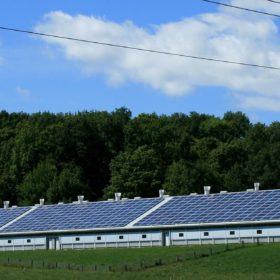
New business model to help utilities own and operate rooftop PV
Scientists from the Lawrence Berkeley National Laboratory in the U.S. have defined a utility-ownership model for rooftop PV they say could raise power company shareholder earnings 2-5%.
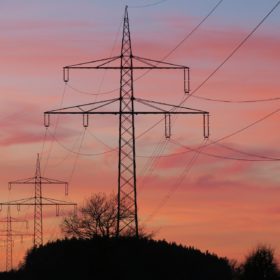
Modi loosens the purse strings to help India’s struggling state utilities
Covid-19 hits to demand and bill payment collection have worsened the plight of the nation’s already debt-crippled power distribution companies, prompting the government to order an exceptional relaxation of lending limits.
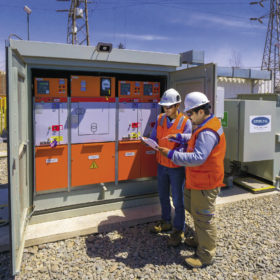
Covid-19 weekly round-up: Differing opinions on energy storage fall-out, a trade show update and some surprisingly positive financials
Negative second-quarter updates from China and uber-low new-solar figures from India, however, show the world is far from out of the woods yet.

Plans for Norwegian graphite battery factory
Norwegian polysilicon maker and silicon business Elkem is planning to build a manufacturing facility in Herøya.

The ‘rubber-band effect’ on renewable energy project margins
David Riester of Lacuna Sustainable Investments, looks at how, on the journey from concept to monetized power plant, renewables and energy storage projects tend to get tugged toward ‘zero’ margin, from either direction. The further the rubber band is stretched, the stronger the pull back toward zero.

New membrane promises cheaper electrolysis
A novel anion exchange membrane has been developed by German chemical company Evonik. Its creators claim it can make hydrogen generation cheaper, as the cells used for electrolysis featuring the device would not require precious metals.

Energy storage investment to approach $10bn in 2025
Analyst IHS Markit has predicted storage will rebound this year following its first year-on-year decline in 2019. The technology is being rolled out at pace despite Covid-19 with state-level policies set to keep the US the global capital for the next five years.
Analysis of Ireland’s first renewables auction
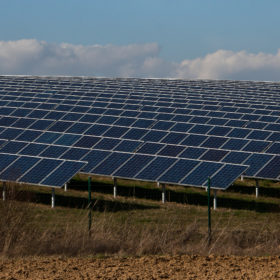
Harsh Goenka, from solar forecasting company Solargis analyzes the results of the nation’s first clean energy tender for pv magazine after the procurement exercise secured an average solar electricity price of €72.92/MWh.

Mexican regulator opposes solar energy communities and storage
With the government having already introduced measures which will reduce the volume of renewables in the national energy mix, further new provisions will restrict the deployment of energy storage and the ability of solar energy generators to sell excess power to nearby consumers.
