
The weekend read: Will duties ADD doubt to India’s solar growth?
The threat of India’s government imposing anti-dumping duties (ADD) against solar cells and modules from China, Taiwan and Malaysia is very real, and runs counter to its own ambitions of hitting 100 GW of solar by 2022. Or does it? Could duties help to boost India’s solar industry in other ways? And does the ongoing political uncertainty create opportunity or trepidation for industry?
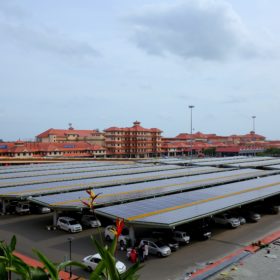
India anti-dumping hearing moved to December 12
The anti-dumping hearing was scheduled to be held on November 30. It has, however, been postponed to December 12, 2017. The India Solar Manufacturers Association (ISMA) still expects a result in its favor.
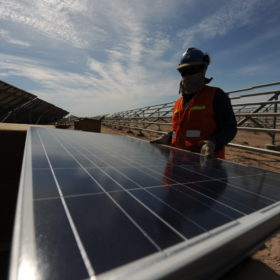
Lowest solar bid in Argentina’s latest RE auction reaches $40.4/MWh
The average price of all solar bids in Argentina’s third renewable energy auction was US$48.9/MWh. The successful bidders will be announced next week.
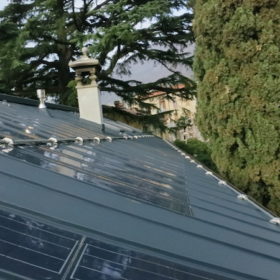
Italy: Clarity on fiscal breaks for sustainable PV investments
The Italian government-run energy agency, GSE has made it clear that the so-called “Tremonti ambientale” fiscal incentive can only be combined with the incentives of the first two Conto Energia programs.
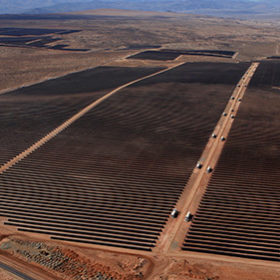
Increased competition in RE auctions raises risk of mispricing, Moody says
A report from Moody’s Investor Services on the importance of evaluating a series of factors other than declining costs of renewables and economies of scale, when approaching a competitive auction.

UK: no budge on solar tax breaks in Budget
Today’s Budget see solar remain locked out on the types of tax breaks available to fossil fuels, while general lack of energy policy continues to fail long-term low carbon investors, argues Solar Trade Association.
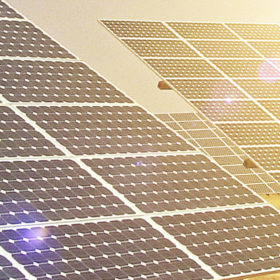
Japan’s METI awards 140 MW in first PV auction — report
Japan’s Ministry of Economy, Trade and Industry (METI) has awarded 140 MW of solar capacity to eight companies across nine locations, with the lowest bid coming in at JPY 17.2 ($0.15)/kWh, according to a local media report.
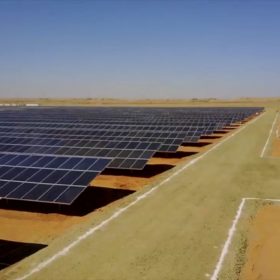
Egypt’s PV net metering set to bear fruit
Egypt’s feed-in tariff scheme expired in October, however recent regulatory updates on the net metering scheme are set to bear fruit for solar PV in Egypt. pv magazine explores the new policy and business landscape.
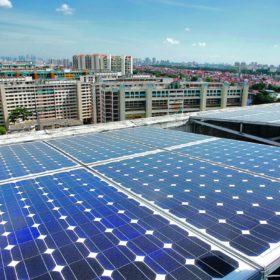
Climate Policy Initiative presents financial solutions for rooftop solar in India
CPI has summarized the present rooftop sector of India, its economics, and the financial facilities to the industry from government and banks. The analyst and advisory firm has presented the solutions for the current financial obstacles to the growth of rooftop solar. The team has presented two Indo-U.S. collaborative initiatives, USICEF and USICFP, with which these solutions can be implemented.

Australian government to back blockchain PV, water project
The Australian government has agreed to provide AU$2.57 million (US$1.9 million) to support a two-year pilot project that will use blockchain technology to pair utility-scale and commercial rooftop PV with a battery, electric vehicle charging stations and water treatment systems in Western Australia.
