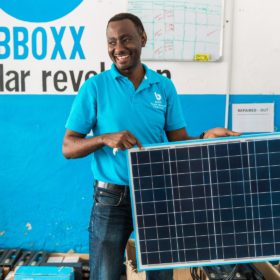
Bboxx cottons on to pay-as-you-go potential of Burkina Faso
The PAYG solar start-up, which is a darling of impact investors, has formed a joint venture with French cotton farming giant Geocoton to establish a foothold in Burkina Faso and says it is aiming to offer its solar home systems to 2 million customers.
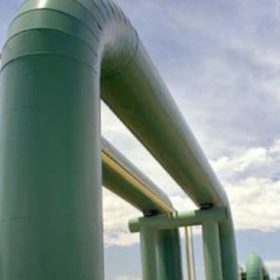
Chinese poly maker moves to establish natural gas-fired hydrogen business
An announcement by GCL-Poly to the Hong Kong Stock Exchange yesterday about the company’s hydrogen plans made no mention of any intent to deploy carbon capture tech to mitigate the emissions of what would otherwise be considered a ‘grey’, fossil fuel version of the energy storage medium.

The Hydrogen Stream: Air Liquide eyes South Korea as Cummins announces fuel-cell truck plans
With Australia prepping plans for vast green hydrogen and ammonia production facilities, two of the country’s state governments are trying to drum up the end-user market as agreements are signed to drive use of the gas in Ukraine and Poland.
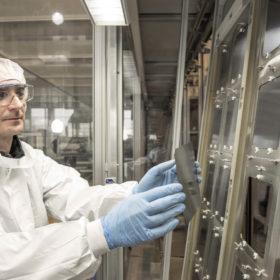
The implications of a messy Meyer Burger-Oxford PV divorce for European perovskites
Last week’s announcement Oxford PV wants to wind up its “exclusive cooperation” with Meyer Burger after the fit out of its 100 MW German factory points to a potential divergence in strategies. And with Meyer Burger considering legal action in response, it could result in a messy, disruptive separation.
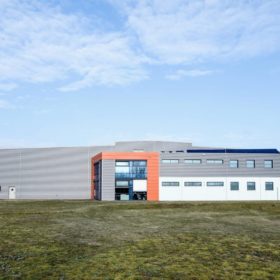
Meyer Burger considers legal action as Oxford PV unilaterally terminates exclusive cooperation
Meyer Burger claims machines to produce perovskite tandem solar cells are still missing at Oxford PV’s manufacturing plant in Germany’s Brandenburg an der Havel. Despite this, Oxford PV terminated the cooperation with the turnkey machine supplier in a surprise move last week. The Swiss technology group, which now produces its own heterojunction solar cells and modules in Germany, is now considering legal action.
Italy’s Eni to acquire 1.2 GW renewable project portfolio in Spain
Independent asset manager Azora is selling the renewable energy portfolio, which includes five large solar PV parks totaling 1 GW in advanced stages of development, located in Andalusia, Castilla-La Mancha, Castilla y León, Catalonia, Galicia, and La Rioja, to Eni.
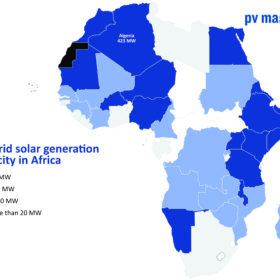
Sahel-wide group buying program could drive solar home system supply
A report commissioned by EU lender the EIB has dismissed the role solar mini-grids can play in achieving universal electrification by 2030 and signaled distribution to individual households should be the way forward, including sales to the residents of UN refugee camps in East Africa.

The Hydrogen Stream: Plans for $75bn, 50 GW green energy hub in Western Australia
Plus, as the European Commission prepares to present its ‘Fit for 55’ climate change package tomorrow, European companies are continuing to develop hydrogen plans, including Shell in Norway and Siemens in Germany.
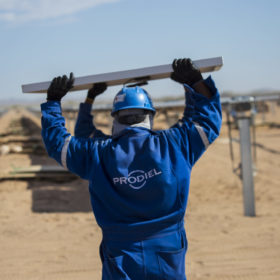
Spain’s Prodiel EPC is looking for a new partner, plans to enter new PV markets
Prodiel recently went from being a single entity to a holding company, comprised of three different businesses. Its project development division has created a 50% joint venture with Everwood, and now the EPC unit that is looking for a new partner to grow.

Interview: Corporates’ climate commitments open doors for massive renewable energy deployment
Corporate renewable energy purchases are at an all time high. In Europe alone, a record-breaking 4 GW of corporate power purchase agreements were signed in 2020, bringing the overall total to 15 GW. Globally, this figure is even higher. As part of the UP Initiative’s quarterly theme on ‘Sustainable electricity and corporates’ critical solar role’, pv magazine spoke to Hannah Hunt, Impact Director at RE-Source, a European alliance of stakeholders representing clean energy buyers and suppliers, about how the business model landscape for such purchases is evolving, and the challenges the sector faces, including shortages in renewable energy supply across Europe.
