Pilar Sánchez Molina
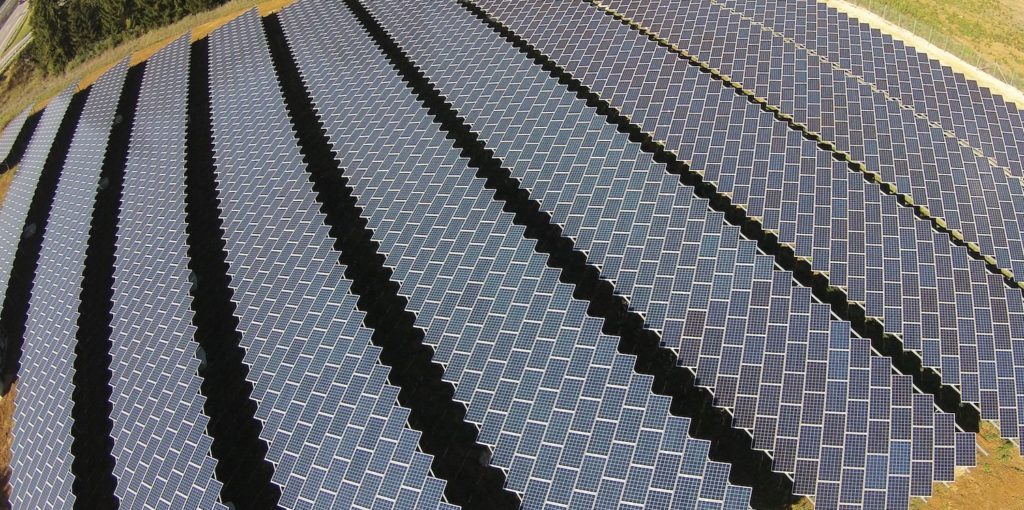

Spain enables 50-plus renewable plants for real-time voltage control
Spain’s grid operator Red Eléctrica and regulator CNMC have launched real-time voltage control services, allowing renewable energy installations to provide dynamic grid support under a new regulatory framework.
Molecular solar battery stores energy for days, yields hydrogen on demand
Researchers at Ulm University and Friedrich-Schiller-Universität Jena have built a molecular system that captures solar energy in a water-soluble redox copolymer, stores it at more than 80% charging efficiency for several days, and releases it as hydrogen with 72% conversion efficiency whenever required.
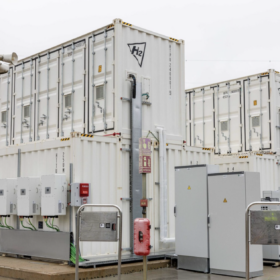
Spain completes testing of Europe’s largest research vanadium BESS
Spain’s Fundación Ciudad de la Energía (Ciuden), a government energy research foundation, has completed operational testing of a 1 MW/8 MWh vanadium redox flow battery (VRFB) system at its Cubillos del Sil technology center, which it says is the largest vanadium flow battery in Europe dedicated to applied research.
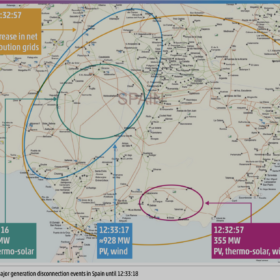
Entso-E report finds systemic failures behind 2025 Iberian blackout
The European Network of Transmission System Operators for Electricity (Entso-E) has published its final root cause report on the April 28, 2025, blackout in Spain and Portugal, finding failures across grid operations, generation, and regulations, and issuing 22 recommendations to strengthen European grid resilience.
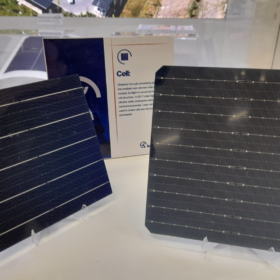
Spanish researchers develop ultra-thin solar cells for any surface
The Silicon and New Concepts for Solar Cells (SyNC) research group at the Institute of Solar Energy (IES) of the Polytechnic University of Madrid (UPM) has produced high-efficiency two-dimensional solar cell prototypes using the “hot-pick-up” technique, with simulations suggesting the cells could meet up to 30% of a building’s energy needs when applied to facades.

Dutch startup plans roll-to-roll factory for perovskite solar cells
TNO has launched Perovion Technologies to industrialize lightweight, flexible perovskite solar cells, targeting niche applications where conventional panels are unsuitable. The company plans to build the first roll-to-roll perovskite solar cell manufacturing facility in the Netherlands by 2030.

Arctech presents dry cleaning robot weighing just 38 kg
The Chinese manufacturer said its new Star Shine I system is already available in Europe and can operate at speeds of 10–18 m/min, performing cleaning routes of up to 3 km round trip and 9 km in a single direction.
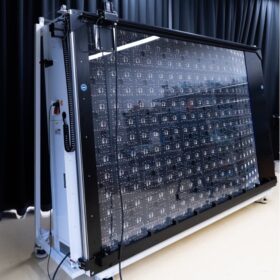
Ciemat unveils large-area multispectral solar simulator for PV module testing
The system enables measurements under controlled irradiance, spectrum, and temperature conditions. It can combine 0.4% spatial irradiance uniformity, 500 ms illumination pulses, and dynamic I-V acquisition to accurately test high-capacitance photovoltaic modules in a single pulse, according to Ciemat.
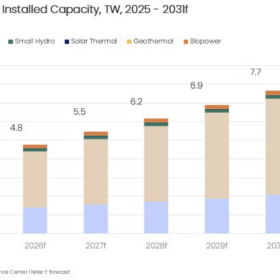
Global solar capacity to reach 6 TW by 2031, says GlobalData
GlobalData says global renewable capacity will more than double to 8.4 TW by 2031, with PV reaching nearly 6 TW, a 13% compound annual growth rate from 2025 levels of 4.1 TW.
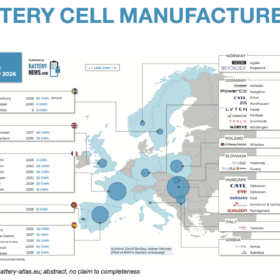
‘Battery Atlas 2026’ maps Europe’s cell, pack and battery manufacturers
The “Battery Atlas 2026” report shows consolidation in Europe’s battery market. More than 2,000 GWh of cell production capacity was announced in 2023, but the realistic forecast for early 2026 is around 1,190 GWh, including approximately 673 GWh led by Asian companies.
