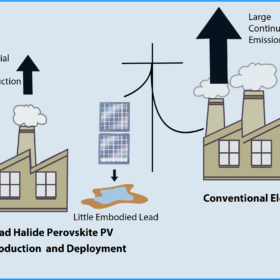
Benefits and risks of lead halide perovskite photovoltaics
Lead halide perovskite PVs (LHP-PV) have rapidly emerged over the last decade as a potentially viable thin film PV technology, because of their high efficiency and potential for low manufacturing costs. However, concerns remain over potential impacts to the environment and human health arising from the use of toxic lead in LHP-PVs.

Can Nam Ngum solar replace Mekong hydro in Laos?
The Lancang-Mekong River is being decimated by hundreds of tributary and mainstream hydroelectric projects from the Tibetan Plateau in China to Lower Sesan in Cambodia. On the Mekong, the Laos Government has constructed the majority of these projects and it is planning even more. But why does it only focus on hydroelectric power plants (HPP’s)? What about other renewable energy sources? Can Nam Ngum solar replace Mekong hydro?

COP, climate, class struggle?
The World Climate Summit in Santiago de Chile, set to be held in just a few weeks, has just been cancelled. Against a background of social protests in the country, concerns have recently grown as to whether logistics and security could be guaranteed for the event. Nevertheless, social problems and environmental protection must not be played off against each other: Both are closely linked to the economic paradigms of recent decades.
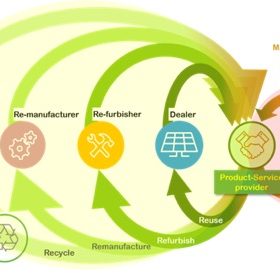
Towards circular business models for the PV sector
With solar energy about to reach the iconic terawatt (TW) milestone of globally installed PV capacity, waste handling and end-of-life (EoL) scenarios become a pressing matter.
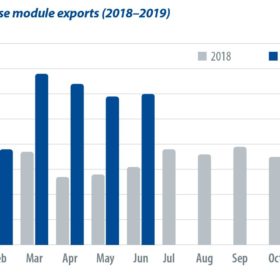
Export analysis
PV InfoLink analyzed the key markets of China’s big module manufacturers, as well as product trends, based on export statistics. According to trade figures, the nation’s module exports totaled 34.2 GW in the first half of 2019, up by more than 90% from the corresponding period of 2018. In a nutshell, overseas demand has been strong in 2019.
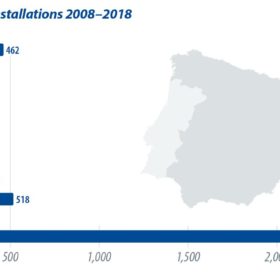
Political uncertainties and market speculation
After several years of stagnation, Spain has started to see a revival in its PV market, writes IHS Markit’s Maria Chea. The country’s newfound growth has been due to a combination of tender and private PPA projects, along with decreasing component costs.
The race has only just begun
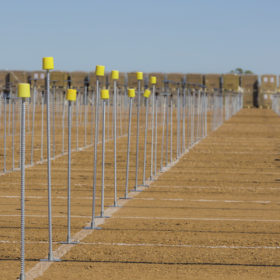
The Australian utility-scale PV and wind industries have just gone through a record two years of construction and commissioning. More specifically, writes Rystad Energy’s David Dixon, utility-scale PV has transformed from a megawatt-scale market to one measured in gigawatts. The resultant boom in utility-scale PV in the country has attracted developers, EPCs and OEMs, from at home and across the globe.
Only with hydrogen can we save the climate
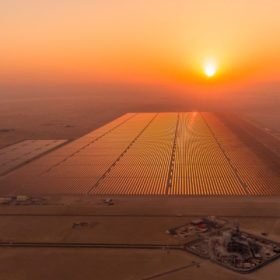
There is no alternative to using hydrogen for climate protection. Climate change and its ensuing measures require a lot of effort, money, and above all the right solutions. Therefore, a meaningful project, which will be perceived worldwide as a model for complete technological change, is key. That is what the Bonn Climate Project and the CTC Bonn stand for! We can already see great steps towards a hydrogen economy being taken in Germany. Steps are good, but not enough; we need the implementation of a hydrogen economy now!
All that solar jazz
As 2019 enters its final quarter, the solar industry continues to face headwinds, even as the markets for solar deployment in Europe, the United States, and Australia remain strong. Paula Mints of SPV Market Research takes us through what to expect up until 2021.

PERC cells: From shortage to surplus
After the “June rush” to complete solar projects in China – as well as the commissioning rush in Vietnam, which saw higher-than-expected demand of 4 GW in the first half – the growth of the regional solar market started to slow down in July and August, before anticipated Chinese demand picks up the slack again. With unexpectedly low demand in the third quarter, module manufacturers reacted first by marginally reducing utilization rates. Cell producers then cut production after cell prices collapsed.
