
Accelerated declines in solar cell prices since late March
In a new weekly update for pv magazine, OPIS, a Dow Jones company, offers bite-sized analysis on solar PV module supply and price trends.

Home solar will eventually triumph in the UK
The United Kingdom is playing catch-up with many of its European neighbors when it comes to solar but recent signs have been hugely promising and the nation remains primed for a solar revolution.

Rapid implementation of NZIA should be used to abolish import tariffs
Tariffs on solar glass harm the European solar industry. This problem can now be easily solved without jeopardizing the European solar glass production.
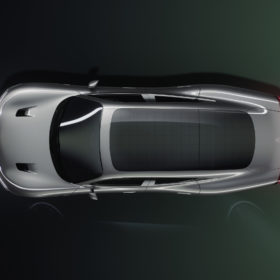
IEC develops standards for vehicle-integrated photovoltaics
In its first monthly column for pv magazine, the International Electrotechnical Commission (IEC) explains how a team of its experts is currently working on the definition of new standards for VIPV systems.

‘I had a severe case of imposter syndrome’
In another article of a series, Women in Solar Europe (WiSEu) gives voice to Claire Gardner, Marketing Manager Europe at Chinese inverter manufacturer Solis. She tells how she had to deal with her own insecurities rather than with a women-hostile environment at the beginning of her career in the renewable energy industry.
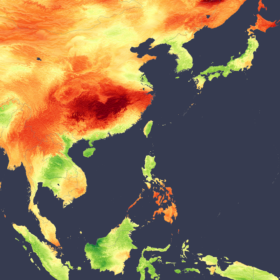
Jet stream, prolonged monsoon shape March solar patterns across Asia
In a new weekly update for pv magazine, Solcast, a DNV company, reports that warm sea surface temperatures and disturbances increased onshore moisture along China’s southern coast, which in turn increased solar irradiance by 5-15% on long term averages.
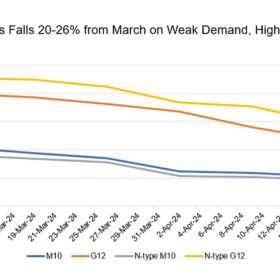
Chinese wafer prices stable-to-soft amid high inventories
In a new weekly update for pv magazine, OPIS, a Dow Jones company, offers bite-sized analysis on solar PV module supply and price trends.
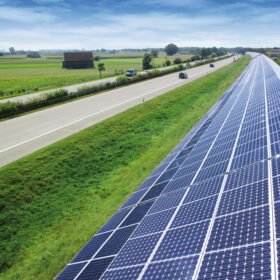
The fastest energy change in history still underway
In 2023, solar photovoltaics and wind comprised about 80% of global net generation capacity additions. Four times as much new solar and wind electricity generation capacity was installed in 2023 as compared with all other electricity sources combined.
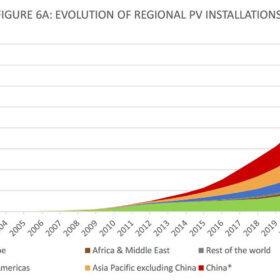
At least 29 countries installed more than 1 GW of PV in 2023
IEA PVPS has published its new “Snapshot of Global PV Markets 2024” report, highlighting key insights and trends. Despite record installations, concerns over profitability and manufacturing dynamics persist, underscoring the need for strategic interventions and policy support to navigate towards a resilient and sustainable PV ecosystem.
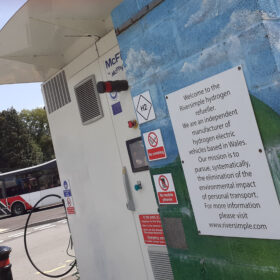
When nano- meets climate technology
The use of metal-organic frameworks (MOFs) to create nanoscale crystal structures to attract hydrogen molecules could drastically improve the energy efficiency of storing and transporting the energy carrier.
