
Solar module prices rise faster than expected in February
Solar module prices increased by €0.01 ($ 0.012)/W to €0.015/W in February, lifting levels 15% to 18% above the December 2024 low despite falling wafer costs, as manufacturers seek to restore margins after prolonged losses.
Home batteries reshape Australia’s national electricity market
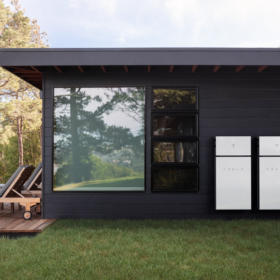
Small-scale behind-the-meter storage is beginning to reshape peak demand in the Australian National Electricity Market (NEM), raising the prospect of a “Bactrian camel curve” in which evening load is split. Within six months of Australia’s Cheaper Home Batteries Program, small-scale storage capacity could supply up to half the peak output of the Eraring coal-fired power station.
Nextpower to supply steel frames for JinkoSolar’s Florida factory
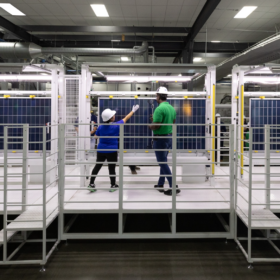
Nextpower will supply more than 1 GW of US-made steel module frames to JinkoSolar’s Florida facility under a multi-year agreement, with volumes scalable to 3 GW over three years.

‘I had to work significantly harder to achieve the same level of credibility and recognition as my male peers’
This week Women in Solar+ Europe gives voice to Eva Belletti, Country Manager Germany at SP Development Europe. She says gender diversity and inclusive leadership in the renewable energy sector enhance decision-making, resilience, and long-term success, while mentorship, sponsorship, and proactive career ownership help women navigate systemic barriers and drive meaningful change.
Storm train hits Western Europe PV as East clears under cold
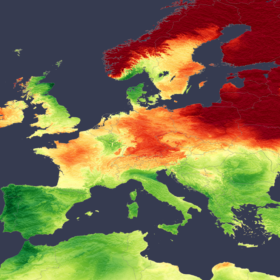
In a new weekly update for pv magazine, Solcast, a DNV company, reports that January 2026 saw Europe’s coldest month since 2010, with Eastern Europe and Scandinavia enjoying above-average solar irradiance under stable, dry air, while the UK, Spain, and Portugal faced record cloudiness and rainfall that sharply reduced PV output.

China wafer prices fall for fourth week as discounting deepens under inventory pressure
In a new weekly update for pv magazine, OPIS, a Dow Jones company, provides a quick look at the main price trends in the global PV industry.
Rethinking solar and storage ROI: Beyond old efficiency assumptions
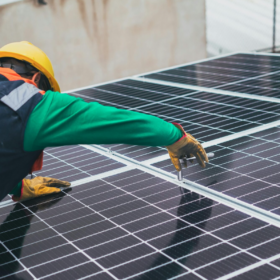
Legacy solar models focused on daytime production, but the shift to battery-driven self-consumption is creating a performance gap that puts long-term ROI at risk.
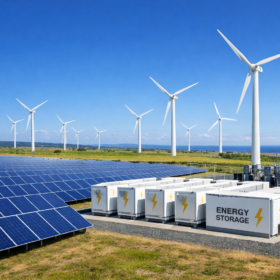
An ever-changing market: Delving into the heart of power purchase agreements
Cross-border VPPAs expose corporates to Basis Risk, causing settlement price gaps and weakening confidence in these hedging tools, contributing to a 35% drop in European PPA signings in 2025 amid complex market conditions. The market is shifting toward more structured, domestic, and hybrid PPAs, supported by BESS and modern IPPs, to better manage risk and realign buyers, sellers, and lenders.

India’s blueprint for sustainable solar success
By embedding quality benchmarks into procurement and manufacturing incentives, policymakers are ensuring that India’s energy transition is durable, not disposable. The focus has moved from rapid installation to long-term reliability — a sign of sectoral maturity.

‘Women need to own their path, because growth comes from skills, not labels’
This week Women in Solar+ Europe gives voice to Iualia Meirosu, Group CFO & Board Member at Romania’s Enexus. She says that Romania’s renewable energy sector is no longer just for engineers – it’s a space where women and men can thrive across operations, finance, strategy, and project management.
