
European Commission reveals circular economy plan amid Covid-19 storm
The trading bloc’s bureaucrats could be praised for grasping the nettle to transform manufacturing in a post-Covid-19 world or accused of burying another slew of red tape whilst member states are distracted, depending on your point of view.
The sky’s the limit: How solar and storage can set a post-Covid-19 example
The airline industry has been among the hardest hit by the Covid-19 pandemic; carriers are in ‘freefall’ as Glen Peters, research director at the Center for International Climate and Environment Research in Oslo recently wrote, with governments mulling stimulus packages for airline bailouts. How we react to the coronavirus outbreak is crucial for society as a whole and the solar and energy storage industries can lead the charge in rewriting the status quo.

Forget toilet paper, Australians are panic-buying PV
Byron Bay-based solar retailer Smart Energy says it is seeing an unprecedented surge in sales and enquiries for solar and home energy storage as consumers look to shore themselves up in uncertain times.

Bangladesh set for largest solar rooftop with industrial leasing deal
Indian company Mahindra Susten will provide engineering, procurement and construction services on a $1.7m, 3.1 MW array for a German-Bangladeshi knitwear company which will buy the power generated for $0.077/kWh.
European industrial strategy makes no mention of solar
The move has been welcomed as a step in the right direction by lobby group SolarPower Europe nevertheless, particularly as it envisages bringing together EU low-carbon businesses. The outline ambition will now be considered by the European Parliament.
Tender for 15 MW solar park in Oman is a far-from-paltry investment
A’Namaa Poultry is seeking proposals for a solar power plant. The project selected will reportedly secure a power supply deal lasting up to 25 years.
More solar power deals pop up in Latin America
Big clean energy supply contracts have been announced in Brazil, Mexico and the Dominican Republic.

Solar lobby group’s UK budget demands unlikely to be heeded
The UK Solar Trade Association has laid out its wish list ahead of new chancellor Rishi Sunak’s first budget speech tomorrow, with an exemption of solar from onerous tax valuations top of the agenda. COVID-19 measures, though, are likely to cast everything else into the shade.

Project developers can secure cash from new IRENA funding pot
The Climate Investment Platform launched by three multilateral bodies in September is now open for business and renewables companies in developing nations could qualify for help with clean energy facilities, renewables-related grid improvements and energy efficiency schemes.
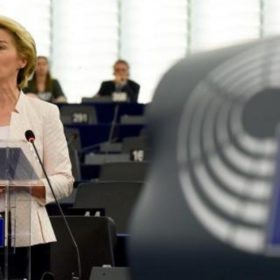
EU climate law sets the stage for a green transformation
Although decried for lacking ambition and as an abdication of responsibility in some quarters, the climate law proposed by the European Commission may be more ambitious than it first appears, as Felicia Jackson, from the center for sustainable finance of the School of Oriental and African Studies at the University of London – considers here.
