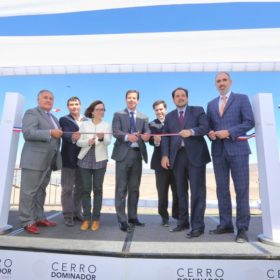
Chile: 62 MW commissioned at Cerro Dominador solar complex
One of Chile’s major renewable energy projects, the Cerro Dominador solar complex, whose combined CSP and PV capacity is expected to reach 220 MW, has begun feeding electricity into the grid.

Banpu targets 300 MW with new downstream unit
Banpu, Thailand’s biggest coal miner, has jumped into downstream solar project development, with the launch of a new subsidiary that aims to install 300 MW of solar capacity over the next five years.
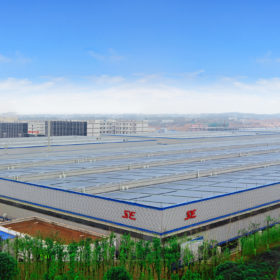
China Singyes posts $12.3 million profit in H1
China Singyes Solar Technologies has recorded a profit of CNY 80.98 million ($12.3 million) in the first half of 2017, down roughly 75% year on year, as it connected just 58.5 MW of fresh PV capacity to the Chinese grid.
Intraco Solar Power signs contracts for 30 MW PV plant in Bangladesh
Bangladesh based company Intraco Solar Power has signed a a 20-year PPA and construction agreement with two government agencies, for the development of a 30 MW PV power plant to be located on the outskirts of the city of Rangpur.
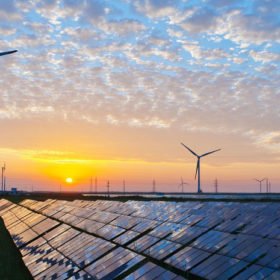
Renewables generate (almost) as much U.S. power as nuclear during H1 2017
The DOE’s latest numbers show renewables rising to 20.05% of U.S. electricity generation during the first half of the year, just behind nuclear’s 20.07%. Solar provided 2% of electricity, and wind 7%.
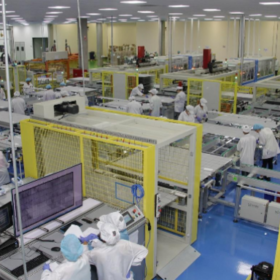
BYD posts $260 million H1 profit as solar sales sag
China’s BYD has recorded a profit attributable to owners of the company of CNY 1,723 million ($259.8 million) for the first half of 2017, down 23.8% year on year, as revenue from its PV and rechargeable battery business slid 15.8% from a year earlier.
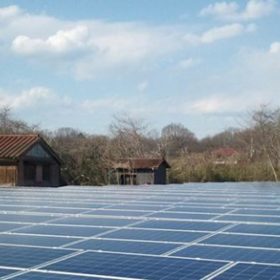
ReneSola may sell PV production ops to regain NYSE compliance
ReneSola may sell off its indebted polysilicon, wafer and PV module production businesses to regain compliance with the listing standards of the New York Stock Exchange (NYSE).
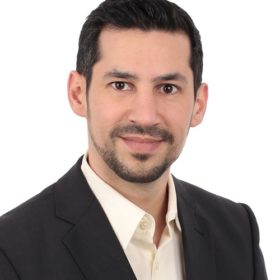
pv magazine 7th Quality Roundtable: why investors should spend a little to save a lot
At the 7th pv magazine Quality Roundtable, to be held on September 21 at the REI show in Greater Noida, India, a collection of experts will examine the chief quality concerns facing this growing market. Confirmed speaker Steven Xuereb of PI Berlin explains how investors should take a long-term view when entering the Indian market, looking beyond immediate gains.
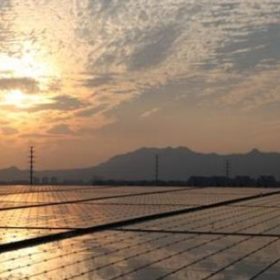
Hanergy claims narrower profit of $31.3 million in H1
Hanergy Thin Film Power (HTF) has reported an unaudited net profit of HK$244.8 million ($31.3 million) in the six months to the end of June, down roughly 70.2% from the preceding year, as revenue edged down 13.4% on the year to HK$2.9 billion.
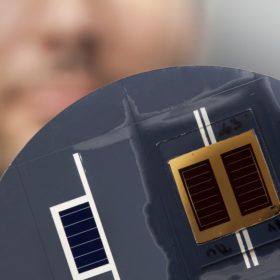
Swiss researchers team with NREL to break 35% cell efficiency
A collaborative project between the U.S. National Renewable Energy Laboratory, the Swiss Center for Electronics and Microtechnology (CSEM) and the École Polytechnique Fédérale de Lausanne (EPFL) has tested a range of multi junction cells in tandem configuration, and achieved efficiencies of up to 35.9%.
