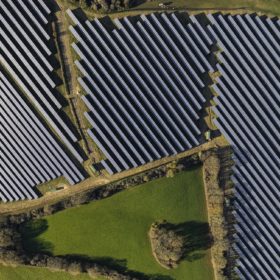
Over 1 GW of PV, 351 MW of storage approved in Ireland
The first round of Ireland’s newly introduced Enduring Connection Policy – 1 (ECP-1), introduced at the beginning of the year, has resulted in considerable success for solar PV and battery storage, with the technologies clearly outcompeting various forms of gas-fired generation, biomass, and wind energy.
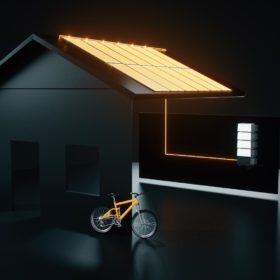
Germany reaches milestone of 100,000 installed storage systems
According to the German solar trade association, BSW-Solar the number of energy storage systems in Germany is set to double in two years. Already, politicians recognize the increasing relevance storage has, in light of the progressing energy transition.

Ramaphosa offers optimism for South African solar
Although lobbyists will be dismayed a 1 GW annual cap on PV will remain, the indications are it will disappear after 2030 – if not before – and renewables appear to have become a more attractive proposition than nuclear, as coal is phased out.

Europe surpasses 1 million EV milestone
The market experienced strong growth in nearly all states. Scandinavian countries lead the charge, but Germany showed strong growth in the first half of 2018, analysts report. An uptake in EV sales might result in profound effects on their use as flexible storage units, recent reports and interviews suggest.
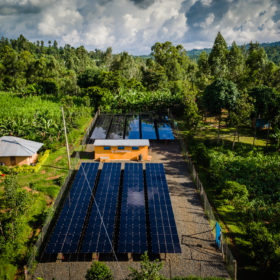
Adding businesses to microgrids helps financial viability
Adding energy-intensive industries to microgrids can help refinance system costs and can lower tariffs for residential consumers, a study suggests. To achieve this though, accurate system design and sizing are essential.
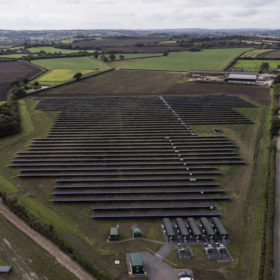
First utility-scale battery helps relieve stress on UK’s national grid
A 10 MW system in Derbyshire provided power to the grid as part of a virtual power plant in a national first. It should prove a popular development, according to the results of a new survey.

Fluence to partner with PUC for peak-load shaving in Ontario
PUC Distribution contracted Fluence to install energy management and storage systems that would allow business in a city in Ontario to reduce high peak-load charges. It is hoped this will reduce costs and help Canada hit its strict carbon emissions mandate.

Nissan Brazil and Federal University of Santa Catarina to cooperate on second-life EV battery research
As the global EV market grows, manufacturers are seeking new revenue streams for used EV batteries. Applications in grid and residential storage systems have become popular. The market for second-life EV batteries is expected to reach $4.2 billion by 2025.
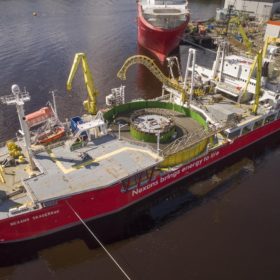
1.4 GW NordLink interconnector receives €100 million EIB hybrid securities purchase
The project connecting Germany and Norway was first conceived in 2015. The 624 km undersea cable will have a capacity of 1.4 GW, when operational in 2020. The EU is supporting the project and other grid infrastructure projects through its EFSI scheme to interconnect the European energy markets, for better renewable energy integration and improved security of supply.
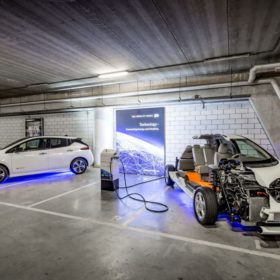
How EVs will transform our grids, or the death of the combustion engine
The driving force behind the innovative energy storage system installed at Amsterdam’s John Cruiff ArenA in the Netherlands, The Mobility House (TMH), talks to pv magazine about the death of the combustion engine, and how electric vehicles (EVs) are presenting both strong business cases, and unparalleled levels of flexibility via decentralized intelligence – blockchain technology – for electricity grids around the world.
