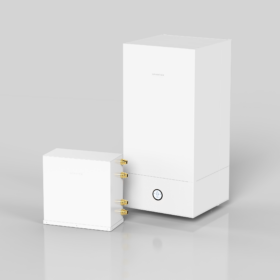
New propane heat pump for district heating
Swedish manufacturer Qvantum has developed a 6 kW heat pump for apartments connected to district heating systems. It uses propane (R290) as the refrigerant.

Assessing the area intensity of PV
Solar is wrongly perceived by some people to be an area-intensive energy generation technology requiring much more space than conventional fossil-fuel power plants.
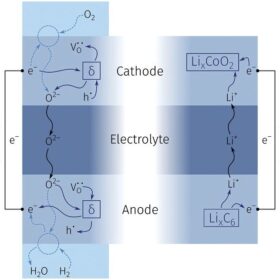
Novel oxygen-ion battery may offer longer lifespan, claims TU Wien
Austrian scientists have created a lab-scale, solid-state, oxygen ion battery based on mixed ionic electronic conducting (MIEC), which is a special class of non-flammable electroceramic materials. The battery has around 30% of the energy density of lithium-ion batteries but can purportedly achieve a longer lifespan.
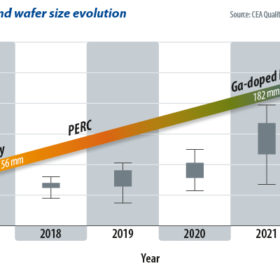
Get what you pay for
Clean Energy Associates (CEA) has calculated the price premium that solar developers will swallow in return for the levelized cost of energy (LCOE) savings offered by the latest generation of high-efficiency PV panels.
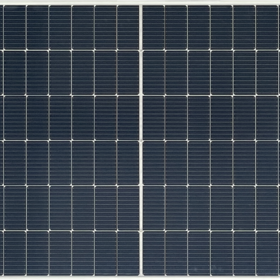
SDN unveils 595 W solar module with 21.28% efficiency
South Korea’s SDN has developed new bifacial solar modules based on M10 wafers. It claims the new panels are the largest to be produced in South Korea.

New Zealand moves forward with 8.5 TWh pumped hydro project
The New Zealand government will investigate the viability of establishing a pumped hydroelectric facility on the South Island. The project could provide up to 8.5 TWh of annual generation and storage capacity to support the nation’s transition to 100% renewable electricity generation.
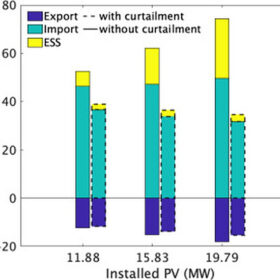
Solar curtailment vs. storage
Swiss researchers have looked at whether storage could be cheaper than curtailment in medium-voltage distribution networks with significant amounts of PV capacity. They considered storage costs, operational costs, grid constraints, electricity costs, PV generation models, and loads.
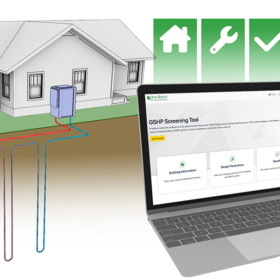
New tool to estimate efficiency, savings of ground-source heat pumps
Researchers from Oak Ridge National Laboratory have developed a free, web-based application that calculates the savings and energy efficiency of residential ground-source heat pumps compared to gas heating.
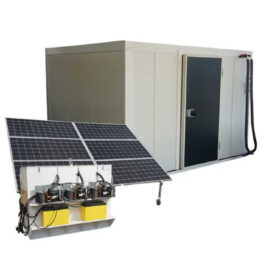
Solar-powered cooling solution for off-grid applications
Phaesun and Solar Cooling Engineering have developed a PV-powered cold room for small-scale farmers in Africa. The solution, which has been installed at a farm in Kenya, includes a 2.8 kW solar array and vapor compression heat pumps.

Bureau Veritas reports strong interest in hydrogen certification
Bureau Veritas tells pv magazine that there is a great deal of interest in hydrogen certification schemes in Europe, Australia, the United States, and the Middle East.
