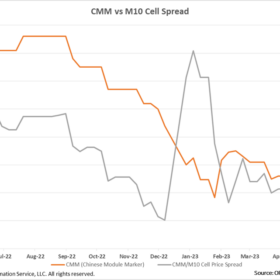
Solar module prices remain at 13-week low, spread against M10 cell narrows from January high
In a new weekly update for pv magazine, OPIS, a Dow Jones company, provides a quick look at the main price trends in the global PV industry.
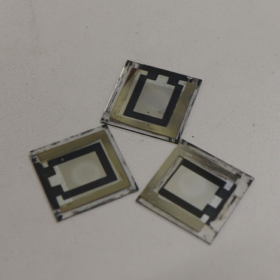
Inverted perovskite solar cell achieves 24.8% efficiency via new additive
The additive consists of a molecule known as 4-guanidinobenzoic acid hydrochloride (GBAC), which is a raw material and intermediate commonly utilized in organic synthesis, pharmaceuticals, agrochemicals and dyestuff fields. The solar cell has a p–i–n structure and, thanks to the new additive, showed considerably reduced defect density on the perovskite film, which in turn results in reduced non-radiative recombinations.
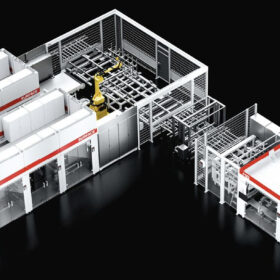
Euro solar is Surfacing
M10 Solar Equipment, a German joint venture, may have shown Europe’s solar manufacturers how to scale their gigafactories by using Siemens’ plant simulation software to ramp up production of its innovative shingled-matrix solar cell production equipment, explains Tobias Wachtmann, director of global glass and solar for Siemens.

Construction begins on solar cycling path in Netherlands
The Dutch province of North Brabant will deploy a 500-meter-long solar bike line and test its performance over a 5-year period. The PV system will be integrated into the asphalt top layer and will consist of 600 solar panels of an unspecified type.
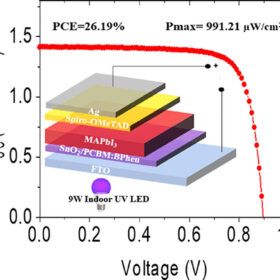
First attempt to build UV-stable perovskite solar cells that harvest energy from ‘black lights’
A UK research group has fabricated perovskite solar cells that can harvest energy from near-ultraviolet (UV-A) indoor LED lights. The devices achieved an efficiency of 26.19%, an open-circuit voltage of 0.90V, a short-circuit current of 1.42 mA/cm2, and a fill factor of 77.56%, resulting in a maximum power output of 991.21 μW/cm2.
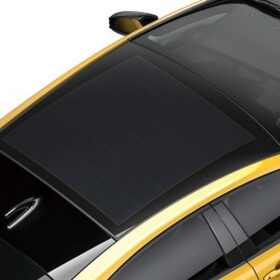
Toyota uses Kaneka’s 26.63%-efficient solar cells for electric vehicle
Kaneka said the cells will be utilized in the roof glass of Toyota’s Prius PHEV electric car. It plans to begin full-scale delivery of in-vehicle PV products this year.
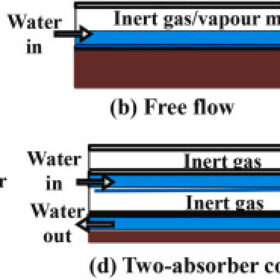
All photovoltaic-thermal system designs at a glance
An international research team has presented all possible system designs and applications for photovoltaic-thermal (PVT) technology. Their review includes conventional PV-T collectors, air-based systems, liquid-based installations, water-based collectors, refrigerant-based systems, heat-pipe-based technologies, dual air-water systems, building-integrated PVT arrays, and concentrated PVT collectors.
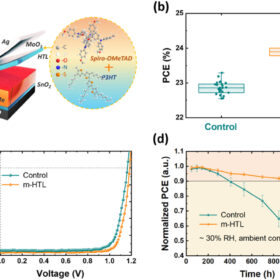
Perovskite solar cell achieves 24.3% efficiency, high stability via binary mixed hole transport layer
Researchers in China have built a hole transport layer with a mixed binary configuration integrating the polymer Regioregular poly(3-hexylthiophene) (P3HT) and Spiro-OMeTAD. They used it to build a perovskite solar cell that was able to retain 90% of its initial efficiency after 1,200 hours of storage in dark ambient environment.

Brenmiller switches on 4 GWh rock-based thermal energy storage system factory in Israel
Brenmiller secured a €7.5 million ($8.2 million) credit facility from the European Investment Bank (EIB) to build the factory.
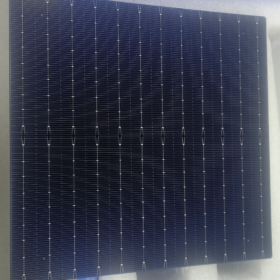
Solar testing group warns of degradation risk for TOPCon
The Renewable Energy Test Center (RETC) raised the issue of ultraviolet-induced degradation of the trending technology in its PV Module Index 2022.
