Ryan Kennedy

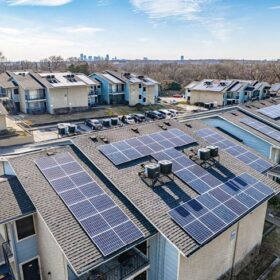
Mandatory utility fees distort price signals for rooftop solar in the US
Regulators in 27 U.S. states are shifting residential electricity pricing toward higher fixed monthly charges and lower usage-based rates, weakening the economics of rooftop solar and home battery systems. This redesign reduces incentives for distributed energy, compresses savings from peak-rate arbitrage, and reinforces reliance on costly centralized grid expansion, potentially raising long-term electricity costs for consumers.
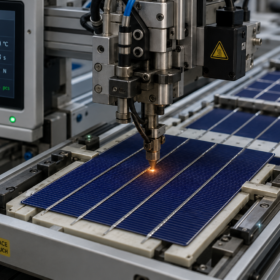
U.S. solar faces massive gap between stated capacity and real factory output
The U.S. solar industry tracks billions in new factory investments, but upstream bottlenecks and strict trade enforcement mean active factory production continues to trail behind headline numbers. Solar Energy Industries Association organized the American Solar and Storage Manufacturing Expo on Capitol Hill, which brought manufacturers together to highlight $43.1 billion in announced domestic manufacturing investments since 2022.
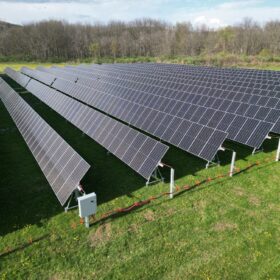
Intelligent solar siting neutralizes local opposition at near-zero cost
Macro-siting models that protect sensitive habitats and farmland from utility-scale development reduce permitting friction for a mere 0.17% cost premium.
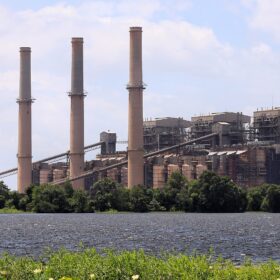
PV power generation to surpass coal in Texas
Utility-scale solar power is projected to surpass coal-fired generation in the ERCOT grid this year as massive capacity additions continue to reshape the state energy mix.
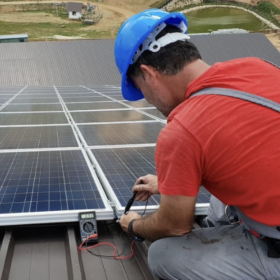
Solar industry faces rising risks from fires and battery faults
The 8th annual Solar Risk Assessment from kWh Analytics identifies equipment-driven fires, regulator fines, and battery inaccuracies as the latest threats to renewable asset returns.
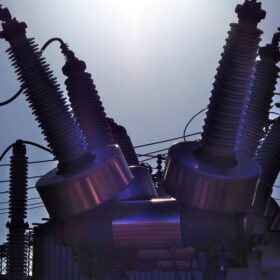
U.S. transformer market faces severe supply constraints
Severe shortages of power transformers are stalling grid expansion as developers face skyrocketing prices and four year wait times for critical equipment.

FH Capital to acquire majority stake in JinkoSolar U.S. manufacturing
Private equity firm FH Capital reached an agreement to acquire a 75.1% majority stake in JinkoSolar’s U.S. manufacturing subsidiary to expand domestic module and battery production.
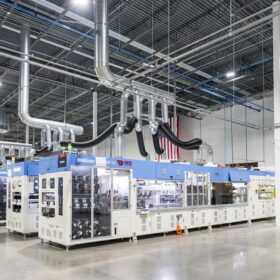
SEG Solar to expand U.S. manufacturing with 4 GW solar module plant
The $200 million investment will bring the company’s total domestic production capacity to 6 GW by late 2026.

US utility signs 4 GW solar, storage buildout deal
Salt River Project and NextEra Energy Resources have signed a power purchase agreement for 3,000 MW of solar and 1,000 MW of battery storage to be built in Arizona through 2027.

California sets precedent by overriding local blockade for massive solar-plus-storage project
California is asserting state authority to revive the $700 million Soda Mountain project, marking a new era where Sacramento can reclaim authority from local counties to force stalled utility-scale solar and storage across the finish line.
