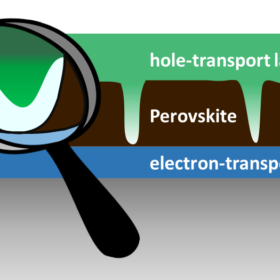
German scientists claim inhomogeneous perovskite films are highly functional
Contrary to common belief, holes in perovskite films may not always negatively affect the performance of perovskite-based solar cells, according to recent research from the Helmholtz Zentrum Berlin (HZB).

Researchers at Cambridge University develop new type of two-cell bio-photovoltaics
Researchers have developed and designed a new algae-powered fuel cell that is five times more efficient than existing plant and algal models, as well as having the potential of being more cost-effective to produce and more practical to use.
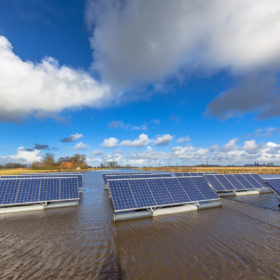
Netherlands: Newly created consortium to develop floating PV
The consortium, which has received funding from the Netherlands Enterprise Agency (RVO), is formed by Waterschap Rivierland, Blue 21 BV, Hakkers BV and TU Delft.

US scientists use additives to improve performance of organic solar cells
The research shows that films used in organic cells, which are produced more slowly with additives, generally perform better than the more rapidly formed films.

Scientists develop laser evaporation process for thin film deposition
A group of researchers from Duke University in the U.S. has developed a new coating process for the creation of hybrid thin film materials. The researchers say their process allows for the creation of solar materials that have until now proven difficult or even impossible to make.
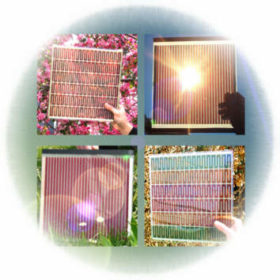
Scientists seek to improve efficiency of dye-sensitized solar cells with halogenes
Halogens have proved to be very successful in accelerating the electron transfer between the electrolyte and the semiconductor.

UMass scientists boost polymer-chain storage efficiency
A team from the University of Massachusetts, Amherst (UMass) has developed a polymer based energy storage system, which releases energy on demand as heat. The scientists say their system utilizes a polymer chain ‘organized like a string of Christmas lights’ and can achieve more than double the storage density of previous polymer based systems.

U.S. researchers develop quantum dot solar glass
A team from the Los Alamos National Laboratory has developed a double pane solar glass, using quantum dot PV technology. The researchers say the glass could be integrated into buildings as a semi-transparent window, or added to existing solar panels to boost efficiency.
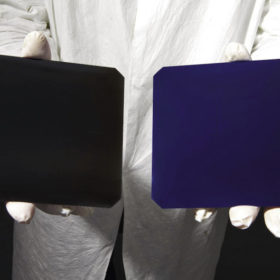
Suntech’s black silicon solar cells enter mass production
Wuxi Suntech Power Co., Ltd has announced its high efficiency black silicon solar cells have successfully entered mass production. It is targeting an annual capacity of 500 MW by Q1 2018.

From the US editor: Renewable energy and information pollution
A recent article in Bloomberg View illustrates clearly the mythology and misinformation that abounds regarding renewable energy, which in many cases is spread by the media.
