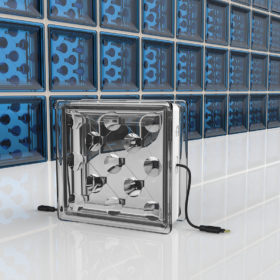
BIPV: Researchers develop solar glass blocks to power houses
Researchers at the UK’s Exeter University have created solar cell-embedded glass bricks, which in addition to generating electricity let in natural light and provide thermal insulation.
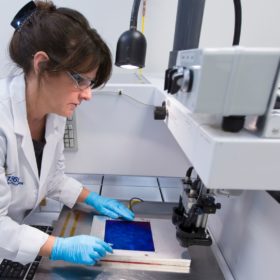
1366 Technologies, Hanwha Q Cells hit 20.3% cell efficiency with Direct Wafer process
U.S. based PV innovator 1366 Technologies, and Korean PV manufacturer Hanwha Q CELLS have announced a new performance record for cells produced using 1366’s Direct Wafer technique. The cells achieved 20.3% efficiency, which has been independently confirmed by Fraunhofer ISE.
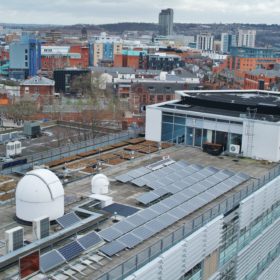
UK researchers launch PV generation forecasting tool
A team of researchers at the University of Sheffield has developed a service to forecast energy generation levels from PV up to three days in advance, allowing grid operators to make decisions further in advance, lowering costs and increasing the efficiency of electricity systems.
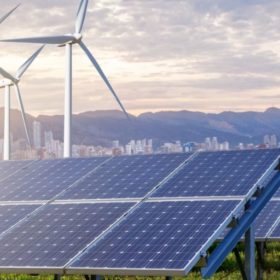
Researchers create solar cell and inverter in single device
Researchers from Spain based organization nanoGUNE have developed a solar cell which, through the use of magnetic electrodes, is able to serve as its own inverter.
Researchers one step closer to efficient, colorful solar panels
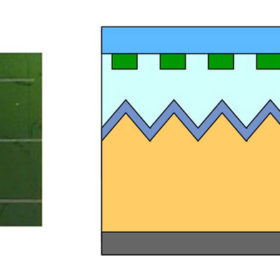
Researchers at the Netherlands’ AMOLF Institute have developed a method for imprinting solar panels with silicon nanopatterns that scatter green light back towards the observer.
Natcore to consult on 20 MW project in Ghana
After the 20 MW PV project planned in the Central region of Ghana was threatened with a 29% feed in tariff reduction, UK based solar developer PSECC Solar Farms turned to Natcore, with the aim of bringing in higher efficiency technology that would make the project financially viable.
Swiss university spin-off develops grid analysis software
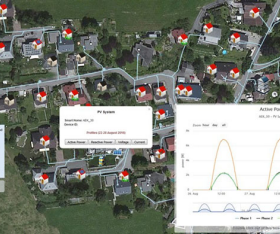
Zurich based startup Adaptricity, which grew out of leading university the Swiss Federal Institute of Technology (ETH Zurich) is preparing to launch a software system which can simulate and analyze regional electrical grids, potentially a valuable tool for investors and grid operators.

Researchers use polystyrene to upgrade perovskite solar cells
Polystyrene does not only bring down manufacturing costs of perovskite solar cells, but also improves their stability, researchers show.
Imec hits 23.9% efficiency on 4cm² tandem perovskite/silicon module
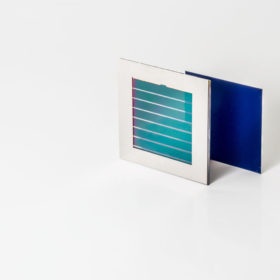
Belgian research institute Imec has achieved a conversion efficiency of 23.9% on a perovskite/silicon tandem module measuring 4 square centimeters. This efficiency level, according to Imec, represents the first time such a stacked configuration has outperformed a standalone silicon solar cell.
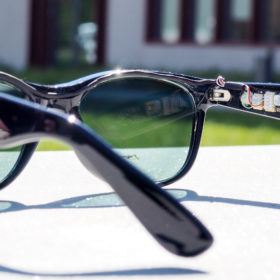
‘Solar sunglasses’ demonstrated by researchers at KIT
Scientists at Karlsruhe Institute of Technology (KIT) in Germany have developed a pair of sunglasses that generate electricity through semi-transparent organic solar cells applied to the lenses. The team aims to demonstrate the potential of organic solar to be integrated into electronic devices, buildings and other applications not possible with conventional PV technologies.
