
New factory-focused solar tender in the offing for India
With last year’s embarrassing manufacturing-linked capacity tender limping along, it has been reported the Indian government – whichever form it takes after the current elections – is considering another tender to incentivize the establishment of a domestic solar industry.
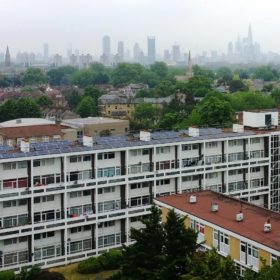
EDF commissions ‘France’s largest collective self-consumption PV project’
A social housing development of 100 dwellings will benefit from the electricity generated by 600 sq meters of PV panels. Any output not used by residents will power hot water tanks, effectively functioning as an energy storage element of the project.

Taiwan’s PV industry to become a GW scale market: The obstacles and opportunities
To keep up with the global shift to renewable energies, the Taiwanese Government has passed the first large set of amendments to its Renewable Energy Development Act since the legislation’s inception in 2009. The amendment bill passed its third reading on April 12, 2019, and was designed to optimize the renewable energy environment, to keep up with the changes to the Electricity Act and to increase civic engagement.

Australian school pioneers renewable PPA to reduce power bills
Echoing a growing appetite for corporate renewable power purchase agreements in Australia, Ascham School has become the first in New South Wales to ink a long-term deal with commercial electricity retailer Flow Power.
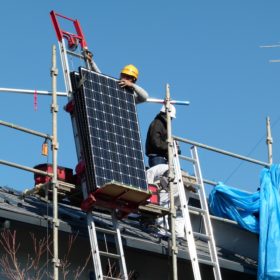
UK mulls 15% rise in VAT rates that would hit residential solar and storage
Having declared a climate emergency last week, the U.K. government is considering raising VAT rates from 5% to 20% on ‘energy saving materials’ in the home. While the tax authorities are blaming Europe, trade body the REA has pointed out the 5% rate would still apply for coal used for domestic heating.
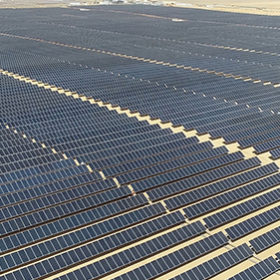
Egypt plugs 780 MW of Benban solar projects into grid
A government ministry reportedly announced 16 operational solar plants with a total capacity of 780 MW have been connected, along with three more projects that are expected to bring another 150 MW of capacity online this month.

PV investors in Honduras facing retroactive review of solar tariffs
The government of the Central American country with the highest installed PV capacity wants to renegotiate contracts awarded in 2015 under an incentive regime. While domestic companies have reportedly agreed to reduce tariffs, international investors are said to be in no mood to capitulate.
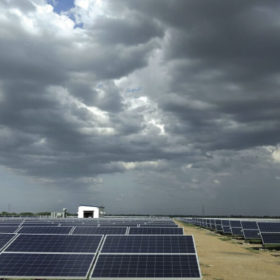
IEA warning against stagnation of renewables
After two decades of growth, the amount of newly installed renewable energy capacity is no longer rising and, despite a 7% growth in electricity generation from clean energy sources, global energy-related carbon emissions have risen 1.7%.

UK scientists build new 3D solar architecture
The back-contact solar cell is said to have a conversion efficiency of around 7%. According to researchers, the cell design includes the removal of expensive transparent conductive oxides.

Longi claims new record for bifacial half-cut module as production equipment orders pour in
The Chinese monocrystalline panel maker said its 72-cell bifacial product has reached an ouput of more than 450 W on the front side. The result was confirmed by Germany’s TÜV-SÜD.
