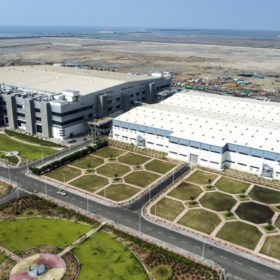
SECI launches tender for manufacturing capacity
The government’s Solar Energy Commission of India (SECI) has tendered 5 GW of solar manufacturing capacity to be set up across the country. The capacity will be linked to grid-connected PV projects with the plants developed on a build-own-operate basis.
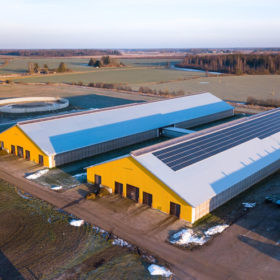
Estonia now has more options for rooftop PV
With new amendments to the Electricity Market Act, the Baltic country will now have its first technology-neutral auctions for renewable energy projects ranging in size from 50 kW to 1 MW, its feed-in premium scheme limited to generators up to 50 kW (which may favor solar), and more chances to create direct lines with single final customers.

Turkey’s Suoz Energy plans vertically integrated module production
The company resumed production at its manufacturing facility in western Turkey. Additional equipment, aimed at making production vertically integrated, was recently acquired from two Greek manufacturers
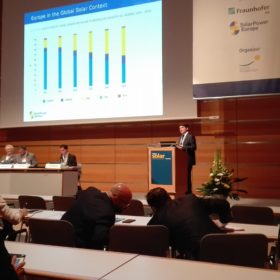
SolarPower Europe revises down global outlook for 2018… but only a bit
Despite recent developments in China, the European solar association believes global newly installed PV capacity this year will reach 102 GW, only 5 GW lower than its previous guidance.

More haste, less speed – or momentum – for PV efficiency related research
Physicists at MIT and in Haifa have come up with a theory for slowing down light that could dramatically improve solar PV cell efficiency – the question now is whether it will work in practice, and on silicon.
France’s 50 MW tender for self-consumption ends up with only 2 MW of power assigned
The failure of the tender depended on a series of factors, the most important of which was the clarification of policy around fiscal exemptions for solar self-consumption in the case of third-party investment.

Physicists shine a light on photon absorbency – research with potentially huge PV implications
Researchers were able to effect electronic transitions at different frequencies, and through a different physical process, by altering the angle at which nanolayers of gold were positioned. Being able to predict and fine-tune the nature of such transitions could have a fundamental affect on solar PV cell efficiency.
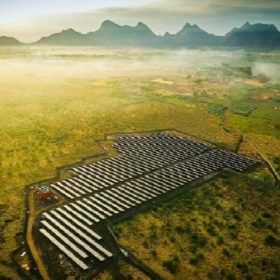
India: The first solar plant bid at INR 2.44 expected in August
The Indian Ministry of New and Renewable Energy (MNRE) says the nation will exceed 175 GW of installed renewable energy capacity as plans for bidding for 115 GW of renewable power projects to March 2020 were announced. The target for PV parks has been increased from 20 GW to 40 GW with some 41 parks in 21 states – with aggregate capacity of more than 26 GW – already sanctioned.
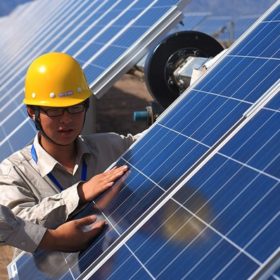
Shanghai Electric reveals plan to acquire 51% stake in GCL-Poly’s polysilicon unit
Shanghai Electric values the GCL polysilicon unit, Jiangsu Zhongneng, at around 25 billion CNY ($3.9 billion). Trading of shares of both companies was suspended today, pending the official announcement of the transaction.

China steps in to fill US solar void in the occupied territories
With Palestinian developers keeping a low-profile since the advent of the Trump administration, Chinese government money is funding PV projects to support electricity supplies in the disputed nation’s crumbling infrastructure.
