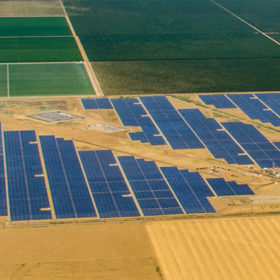
The weekend read: California’s solar and wind integration challenge
As a leader in the global energy transition, California is putting some of the highest levels of solar and wind on its grid in the world to date. And while the state’s grid operator has made some progress, the integration of these resources is currently limited not by physics, but by market rules and operational practices.
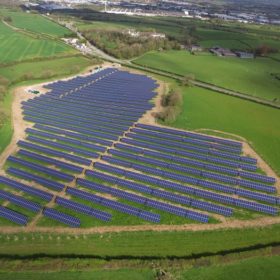
2017 saw UK switch away from coal, gas to renewables
While they remain the dominant source of energy supply, there was a shift away from fossil fuels to renewable energy in the U.K. last year. The country is “comfortably” on track to exceed its 30% renewables target, says the government.

Germany prevents China from joining 50Hertz
The Chinese state-owned State Grid Corporation of China has been attempting to acquire a 20% stake in German transmission system operator, 50Hertz for some time now. After the intervention of Germany’s Federal Government, however, this share will now go to domestic development bank, KfW.
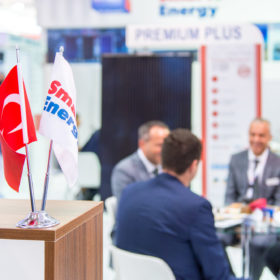
Turkey’s Smart Energy talks quality and customer proximity – Video interview
Turkish EPC and module manufacturer, Smart Energy highlighted the importance of high-quality products and the perks of operating a giga-fab right at the gates of Europe to pv magazine at this year’s Intersolar Europe.
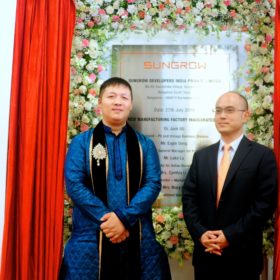
Sungrow opens $5.5 million 3 GW PV inverter factory in India
The Chinese solar PV inverter manufacturer officially opened its first non-domestic fab today: a 3 GW central and string inverter factory in Bengaluru, Karnataka. It is targeting a 50% market share in India in 2019, and mulling setting up an R&D center in the country. pv magazine attended the inauguration.
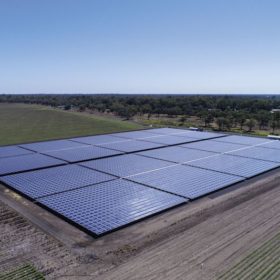
Module price declines in Australia could result in $60/MWh utility-scale solar
Falling module prices could very well dramatically enhance the competitiveness of large-scale solar in Australia – pushing the price at which PV can be produced below the wholesale curve. Rystad Energy believes that with a 20-30% module price decline, as has been forecast, $60MWh utility scale solar could become the new reality.
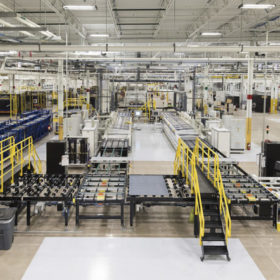
First Solar sees manufacturing hiccups, but bookings remain strong
The thin film PV maker reports difficulties in ramping its new Series 6 product, as well as pressure from module price collapses.

Italy’s Terra Firma sells solar platform RTR for €1.3 billion
Italian PV asset manager, Terra Firma has sold its solar energy platform for €1.3 billion to Italian infrastructure investor, F2i.

Total looks to Chinese EV market
Oil and gas company Total has announced it will work alongside Shanghai-based NIO – the world’s inaugural Formula E champion – to develop products for a potentially huge electric vehicle marketplace in the populous Asian nation.
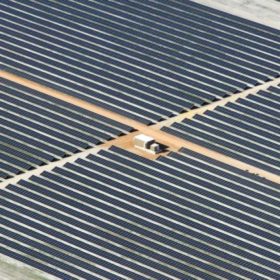
Renewables power ahead in Australia
Green Energy Markets’ latest analysis shows the National Electricity Market is on track to get 33% renewable electricity by 2020, with individual states performing well beyond that. But the report claims solar jobs will be lost unless the National Energy Guarantee’s 26% emissions reduction target is lifted.
