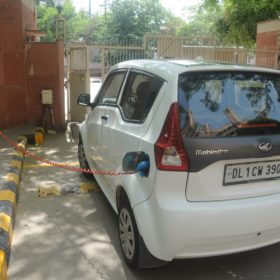
India’s NTPC set to enter EV charging stations business
The National Thermal Power Corporation Ltd (NTPC), India’s largest power generation company, is seeking pan-India license to accelerate its electric vehicle charging stations business.
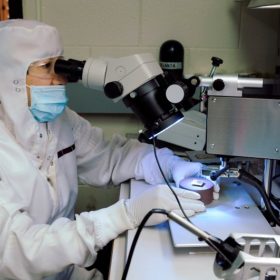
A*Star researchers develop technique for cheaper solar cell production
A*Star researchers, in a bid to find an alternative to silicon-based solar cells, are investigating a new material that is more cost-effective and easier to produce that could also lead to more efficient solar cells.

Interview: Floating PV is poised to make a splash, says SERIS
At the recent PV Taiwan event, pv magazine caught up with Lu Zhao, head of PV System Technology Group at the Solar Energy Research Institute of Singapore (SERIS) to discuss the current potential of floating PV applications, and examine how hydropower coupled with floating solar could become a world-leading energy sector.
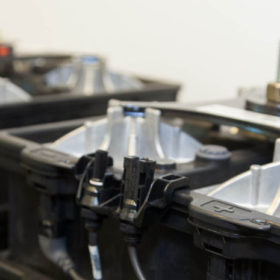
Dutch researchers unveil li-ion battery capable of 50% more energy
ECN spin-off LeydenJar has developed a lithium-ion pouch cell prototype that increases the storage capacity of rechargeable batteries by 50%. With these advances devices such as electric cars, smartphones, laptops and other battery-based products can enjoy longer durability, they claim.
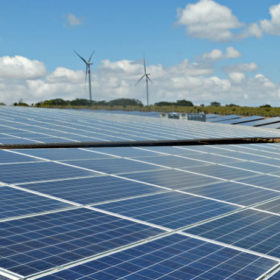
Fortum says it is not exiting the Indian solar market
The Finnish utility has reiterated its commitment for the Indian PV market, after a media article had reported that the company is seeking to sell its solar assets in the country.
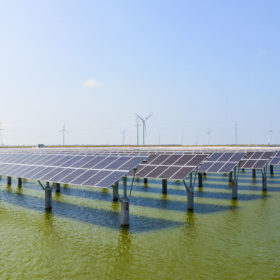
LONGi claims 22.71% PERC efficiency world record
Germany’s Fraunhofer ISE CalLab has confirmed that China’s Longi Green Energy Technology has achieved a record 22.71% conversion efficiency with its monocrystalline passivated emitter rear contact (PERC) solar cells.
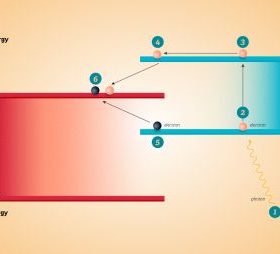
Technology with electron multiplication potential comes out of Lab at University of California
A new photodetector, a device that senses light, has been developed by Physicists at the University of California. The device functions by combining two distinct inorganic materials and producing quantum mechanical processes that could revolutionize the way solar energy is collected.

Solar may reach 6 GW in the Netherlands by 2020, report says
The Dutch research institute ECN also believes that 20 GW of installed PV capacity could already be reached by 2035.

Enel wins Ethiopia’s 100 MW solar tender
The tender process was launched by Ethiopian power utility EPP in May 2016. The solar plant will be built in Metehara, around 200 km east of Addis Ababa.

Solar costs will fall 60% over next decade to fuel PV adoption, says IRENA head
The International Renewable Energy Agency (IRENA) forecasts as much as 90 GW of new solar additions annually across the globe over the next few years, driving a 60% reduction in costs.
