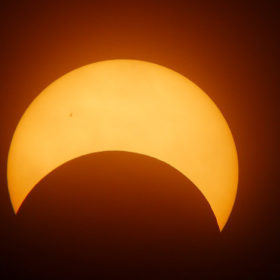
California grid operator gets ready for August eclipse (with graph)
With California getting a higher portion of its electricity from solar than any non-island nation, the stakes are high with this summer’s eclipse. Fortunately, Europe has already been down this road.
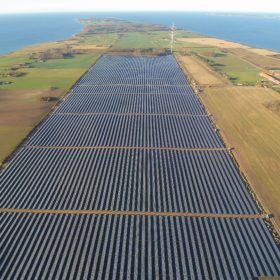
Denmark: solar without incentives is possible, but bureaucracy is killing it
Interview: Denmark is planning a future without incentives for solar and renewables, after abruptly closing the “transitional” incentive program for PV installations up to 400 kW in December. The Danish PV market, meanwhile, has now come to a halt. pv magazine asked Peter Ahm, the CEO of PA Energy and Danish representative to the International Energy Agency’s (IEA’s) PV Power Systems Programme, how the Danish solar market can further grow in the short and long term without subsidies.
Jordan’s thriving net metering PV sector welcomes new 16.5 MW system
A few days after reporting on Jordan’s largest net metering PV system of 17 MW capacity, it appears that a new system of just 500 KW less capacity is also under way. Jordan’s commercial net metering PV sector appears to be on an encouraging upward trajectory.
Italy opens ancillary services market to pilot renewable energy and storage projects
The project is the initial stage of an organic reform of the Italian ancillary services market, which is expected to be implemented in accordance with the European balancing code.
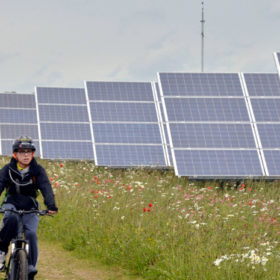
Minnesota’s solar market is growing fast (with chart)
Minnesota installed 203 MW-DC of solar during the first quarter, adding to 207 MW deployed in 2016. The state is expecting to reach more than 800 MW of installed capacity by the end of this year.

African Development Bank supports 20 MW off-grid solar project in Zimbabwe
AFDB’s Sustainable Energy Fund for Africa (SEFA) has agreed to provide Oxygen Energy with $1 million in financing to support the preliminary phase of a 20 MW off-grid rooftop solar project in the eastern African country.
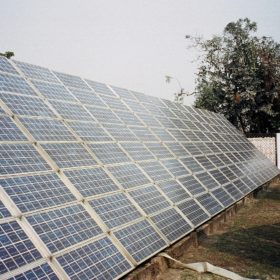
RCR wins EPC contract for 110 MW in Australia
Sydney-based energy infrastructure specialist APA Group has selected RCR Tomlinson as the EPC contractor for a 110 MW solar project in the town of Dalby, Queensland. The contract is valued at roughly A$175 million ($129.3 million).

Moldova sets solar FIT of $0.10/kWh
A tariff of MDL 1.90 ($0.10)/kWh will be granted for the first time to a 41 kW PV system planned by local developer Opal-Succes SRL. Furthermore, the authority has granted special tariffs to three wind projects totaling 6.5 MW. The country’s new legislation on renewables came into force at the end of March.
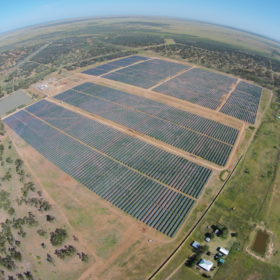
CEFC offers $44.5 million of financing for 43 MW in Australia
The Clean Energy Finance Corp. (CEFC) will provide AU$60 million ($44.5 million) in financing to RATCH-Australia to turn an idled coal-fired plant in Collinsville, Queensland, into a 42.5 MW solar array.
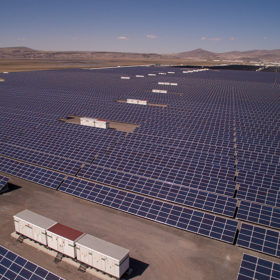
SMA holds firm as inverter revenue leader, with Huawei topping shipment charts, says IHS Markit
Latest market data from analysts shows that Huawei shipped the most inverters last year, followed by Sungrow, while SMA, Huawei and SolarEdge pulled in the most revenue worldwide.
