
French presidential election: what to expect for solar from the winners of the first round?
Both winners of the first round have said they want more solar during their electoral campaigns. While Macron promises to double installed PV capacity by 2022, Le Pen claims she will push for a massive deployment of solar and biomass (not wind), although under an “intelligent protectionism”.
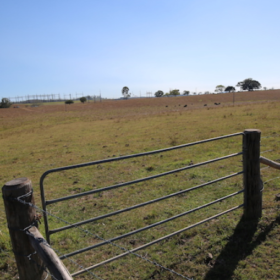
Solar Q reveals plan to install 350 MW in Australia
The company aims to build what would be one of the country’s largest PV arrays near a high-voltage substation in Queensland’s Lower Wonga region. Via the substation, the project would supply electricity to cities and towns such as Gympie, Gin Gin, Teebar Creek, Mungar, Kilkivan and Brisbane.
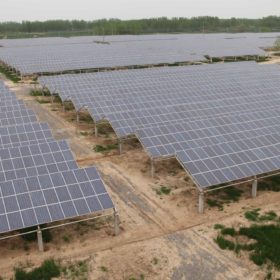
United PV to raise $85.4 million with share issuance
The Chinese solar investor and developer has revealed plans to issue 700,000,000 shares to Driven Innovation at HK$0.95 per share, representing about 9.39% of its existing issued share capital. It expects net proceeds to reach HK$664.5 million ($85.4 million).
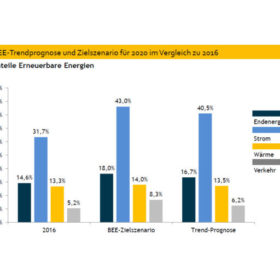
Germany could miss 2020 renewable energy target, report says
According to German renewable energy association BEE, the country could fail to reach its 2020 EU target for renewables covering 18% of its total energy consumption. The association claims that if Germany aims to achieve this target, an additional 22 TWh of electricity from renewables per year must come from the power, heat and transport sectors.
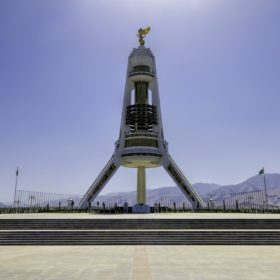
OSCE helps Turkmenistan take advantage of its solar potential
The international organization has organized an event to help local government and institutions to develop a national strategy for solar energy.
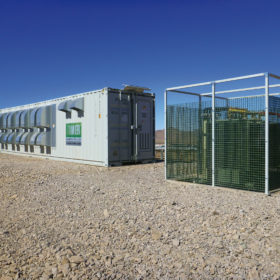
Fimer provides inverters for 754 MW PV project in Mexico
The Italian inverter maker will supply its devices for Mexico’s largest solar project. The company is also planning to expand capacity at its manufacturing facility in northern Italy.
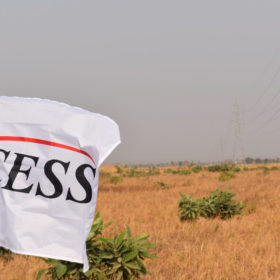
Access Power gets financing for 50 MW PV project in Nigeria
The $1.65 million loan will be used to co-finance a 50 MW solar facility under development in Nigeria’s Kaduna State. The company expect to reach financial close for the project by the end of this year.
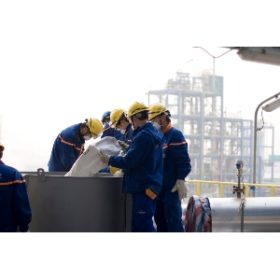
Arkema increases fluoropolymer production capacity in China by 25%
The capacity increase at Arkema’s Changshu platform near Shanghai aims at better serving the company’s customers in the storage and photovoltaic sectors.
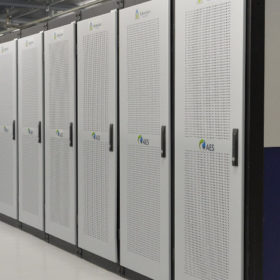
SDG&E signs contracts for 83.5 MW more battery storage
The U.S power utility is going for more lithium-ion batteries, including the world’s largest battery system, to accommodate its leading portion of renewable energy.

Help wanted? U.S. solar employers have trouble finding qualified workers, study says
A new report from The Solar Foundation reveals that two-thirds of U.S. solar employers are struggling to find qualified workers and that investment in post-hire training is the key to making sure the industry’s spectacular job production continues.
