RCT Power pivots from hardware to AI-driven storage systems amid global price competition
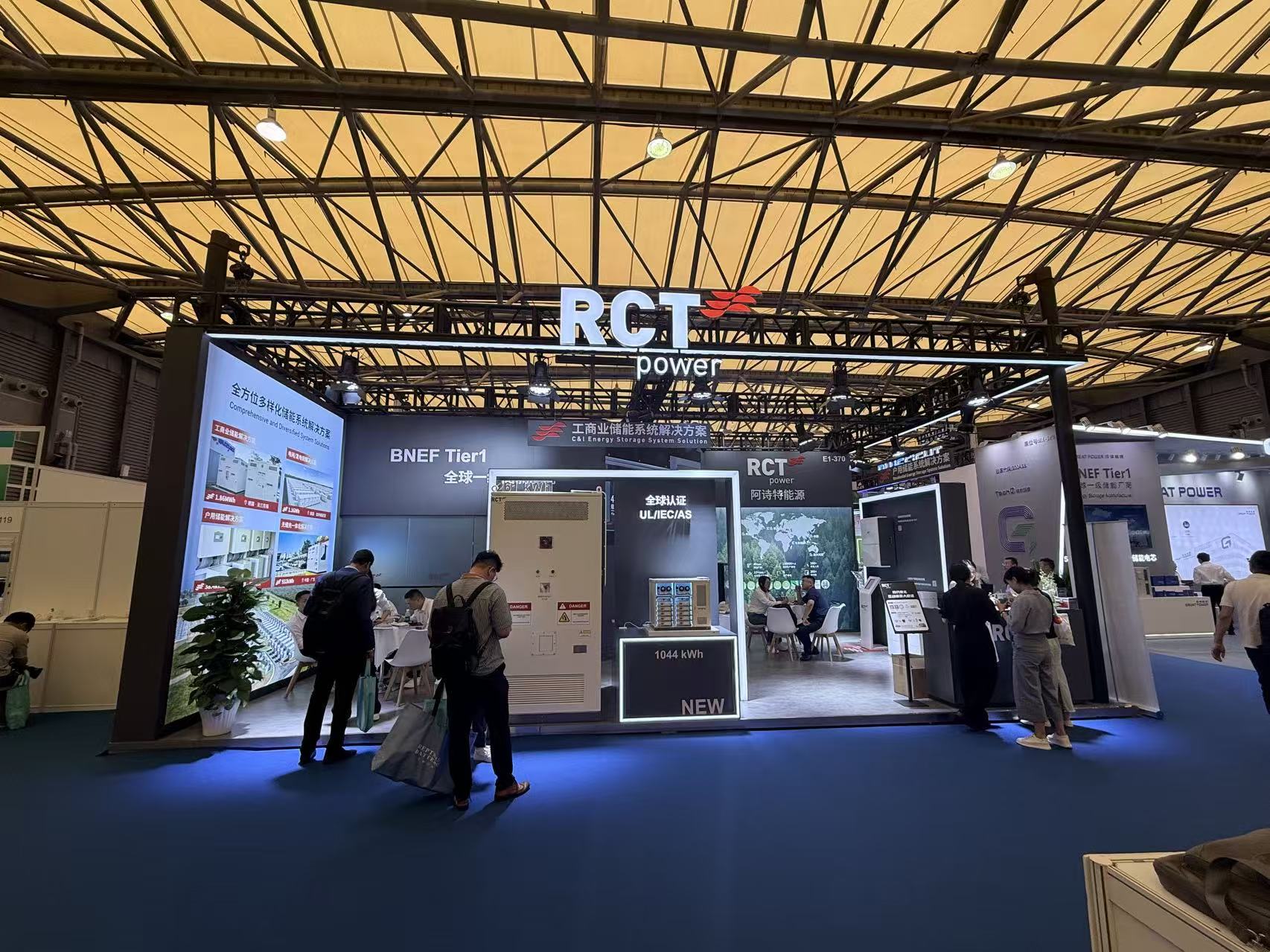
At the 2025 SNEC ES+ exhibition in Shanghai, the booth of Jiangsu RCT Power Technology Co stood out for its understated approach. Instead of a light show, it presented a cutaway model of its newly launched LABEL CESS 1044 liquid-cooled commercial and industrial storage system, designed with a modular structure, dual-side access and a six-dimensional fire safety mechanism. Founded in Konstanz, Germany in 2015, RCT is positioning itself as a global systems provider by combining “manufacturing depth, software intelligence and local integration” to break free from price-driven competition in the global storage market.
The year 2024 marked a pivotal moment for the company. RCT was listed for the first time in BloombergNEF’s Tier 1 global storage ranking, becoming one of the few rising German firms to achieve this status. Its 10kW residential storage product topped Germany’s HTW Berlin efficiency rankings for the fifth consecutive year. It also secured multiple leading positions in Chinese storage rankings and received the National Special New “Little Giant” award and the AAA Green Factory certification in Suzhou. These achievements reflect a strategic shift from simply selling hardware to delivering life-cycle energy solutions.
“In the early stages, we were indeed an equipment vendor, but customers now seek full life-cycle support, from design and installation to operations and market participation,” said RCT marketing manager Xie Huayang during the exhibition. “Hardware alone leads to homogeneity and price wars.”
This shift has reshaped the company’s global strategy. In the US, RCT has established a California-based subsidiary with R&D and commercial capabilities to respond rapidly to regulatory changes. In Southeast Asia, it is partnering with C&D Emerging Energy for a solar-plus-storage roadshow in Ho Chi Minh City in July 2025, targeting Vietnam’s expected surge in industrial storage demand. Its Malaysian plant supports Finnish energy major Wärtsilä’s global projects, while the Suzhou EPZ factory has been certified as a TÜV Rheinland Zero Carbon Facility.
“Our overseas expansion is not simple export but driven by deep localisation and regulatory convergence,” Xie said. “In the US, we not only build teams but also track global policy to dynamically align with UL and NEC standards.”
RCT is increasingly shifting competition from hardware capabilities to intelligent systems. While the CESS 1044 is marketed for its flexibility, efficiency, safety and ease of maintenance, the company views its in-house RPEMS energy management system as the core differentiation. It enables cluster-level control to minimise current circulation, improves charging efficiency and supports full life-cycle monitoring with AI-powered predictive maintenance.
“Without a breakthrough in battery chemistry, hardware optimisation is limited,” said Xie. “The real competitive edge lies in software and system integration.” In select markets, RCT has integrated its EMS with electricity trading platforms, allowing systems to respond automatically to price signals for peak shaving, virtual capacity expansion and emergency response. AI is also used for state-of-charge and state-of-health estimation and failure prediction.
This strategy is reflected in RCT’s collaborations with global technology companies. In April 2024, it expanded its partnership with Schneider Electric in distributed storage, digitalisation and solution co-development. In October, it celebrated the fifth anniversary of its collaboration with Wärtsilä, with the 6,000th Q-cabinet rolling off the production line. According to Xie, such partnerships “compensate for our gaps in electrical control while feeding international engineering experience into our R&D.”
RCT is avoiding aggressive expansion at the expense of quality. Maintaining a brand positioning of “German Technology, Global manufacturing, Local Service”, it seeks to reduce costs through supply chain optimisation and manufacturing process improvements rather than price cuts. “We will not compromise on quality to compete on price,” Xie said.
This approach is embedded in its product design. The factory-preassembled, plug-and-play CESS 1044 features a dual-access layout for easier maintenance. The RESS 15kW residential system supports up to six inverters in parallel, reaching 90kW for residential and small commercial use. “We incorporate regulatory requirements, space constraints and serviceability at the design stage to reduce client deployment costs,” Xie noted.
Looking ahead, RCT plans to deepen its global footprint, expand AI and software capabilities and explore new business models such as solar-plus-storage-charging systems, virtual power plants and microgrids for distributed energy and EV ecosystems. “The core value of storage is not in the volume of energy cycled, but in the reliability of rapid system response during grid imbalances,” Xie said. “Responsiveness and reliability will define market leadership.”
As storage shifts from an optional add-on to foundational grid infrastructure in the global energy transition, the challenge for firms like RCT may lie less in technology or scale than in balancing standardisation with localisation, cost with value and expansion with discipline. “Future competition will centre on integrated system experience,” Xie said. RCT’s model of coupling manufacturing discipline with intelligent systems could offer a template for the next wave of storage firms expanding globally.