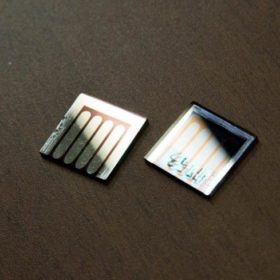
Korean scientists increase stability for perovskite cell
A joint group of researchers from South Korea’s Ulsan National Institute of Science and Technology (UNIST) and the Korean Institute of Energy Research has developed a method for increasing the stability of perovskite solar cells using low cost fluorine.
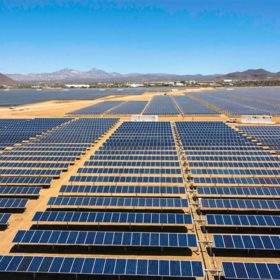
BNEF shines light on China’s solar curtailment problem
Approximately 56.2 TWh of solar and wind generation was curtailed in China last year, underscoring how excessive investment and an oversupply of electricity pose an ongoing threat to renewables development, according to newly released research.

India’s Mytrah may delist from AIM prior to India IPO
Mytrah Energy might cancel its listing on the Alternative Investment Market (AIM) in London before launching its tentatively planned initial public offering (IPO) in India, according to a recent report.
India’s EESL to install 300 MW of domestically produced PV modules
Energy Efficiency Services Ltd. (EESL) has procured PV modules from several Indian manufacturers at a lower rate than it can from Chinese suppliers, setting a new benchmark for panel prices in the country.
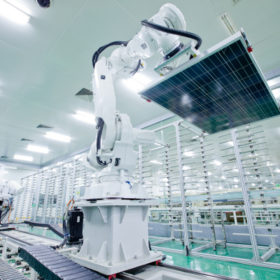
JinkoSolar claims new 22.78% PERC efficiency record
JinkoSolar has revealed that the Chinese Academy of Science Testing Laboratory has confirmed that it has achieved a conversion efficiency of 22.78% with its P-type monocrystalline passivated emitter rear contact (PERC) solar cells.
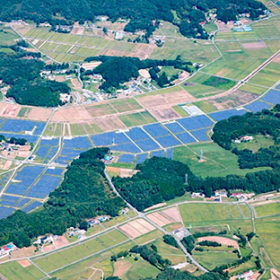
NTT Facilities finishes building 23 MW in eastern Japan
NTT Facilities has connected 23.37 MW of solar capacity to the grid in eastern Japan’s Fukushima prefecture.

Comtec, Sunway to collaborate on PV storage applications
A unit of Comtec Solar Systems has agreed to collaborate with a subsidiary of Malaysian construction group Sunway on the development of large-scale solar battery systems.
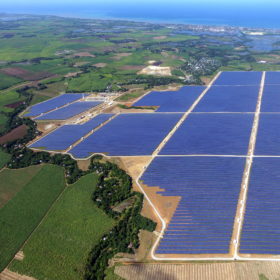
Equis Energy snapped up by GIP in record $5bn renewables deal
The Singapore-based renewable energy developer has agreed to be sold to investment fund Global Infrastructure Partners. China Investment Corp, Canada’s PSP Investments and other co-investors are also involved in the deal, which is the largest yet seen for the renewable energy industry.
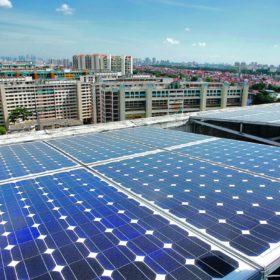
Singapore to receive $18m solar and storage research boost
The country’s Energy Market Authority (EMA) has awarded two research grants to various consortia and higher education establishments specifically to support improvements in Singapore’s solar power forecasting abilities, in addition to the creation of a test-bed for developing energy storage capabilities.
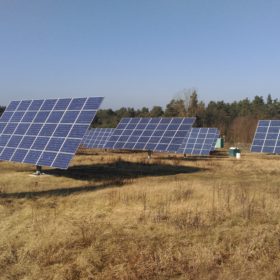
Indian large-scale solar growth could slow to 5-6 GW next year, finds Bridge to India
The Indian solar market is presently undergoing many challenges, including the GST effects, high module process and decelerating power demand. India’s utility sector is expected to stabilize at a much lower 5-6 GW growth rate per annum for the next two-three years, says Bridge to India.
