Chinese PV Industry Brief: New budget for residential PV, financials for Daqo, Canadian Solar
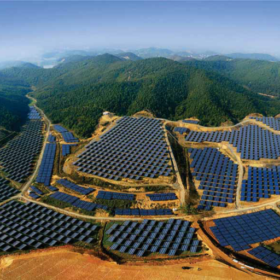
China’s National Energy Administration (NEA) has allocated some $77 million for residential PV incentives. This should be enough to deploy another 1 GW of rooftop PV.
New applications, surging demand
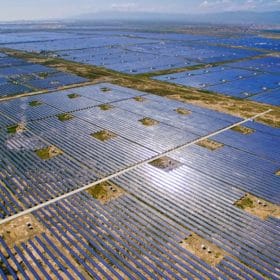
China’s project development segment is dynamic, to say the least. Having undergone significant changes toward a “subsidy-free” footing, developers are now facing requirements to integrate storage, deploy hybrid arrays, and pursue self consumption through BIPV and agrivoltaics applications, writes Frank Haugwitz, the director of the Asia Europe Clean Energy (Solar) Advisory (AECEA).
Chinese PV Industry Brief: Datang reveals results of 5 GW procurement tender
Longi is also planning to raise US$1.09 billion to support its plans to increase PV cell capacity, and Talesun has secured a solar module supply agreement from the United States.

GCL auditor resigns over silicon project pre-payment probe
Deloitte has walked away from the polysilicon manufacturer, despite the latter having followed the accountant’s recommendation to appoint a third party to investigate why a near-$80 million payment was made in September 2019. Apparently the parties could not agree the detail of the investigation to be carried out.
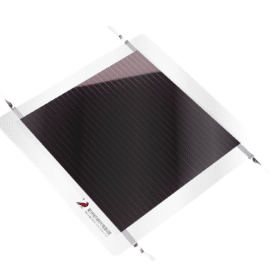
Microquanta claims 20.2% efficiency on small perovskite module
The result, confirmed and certified by the China Institute of Metrology, amounts to the sixth conversion efficiency landmark achieved by the six-year-old, Hangzhou-based manufacturer.
Compressed air tech for solar module cleaning, cooling
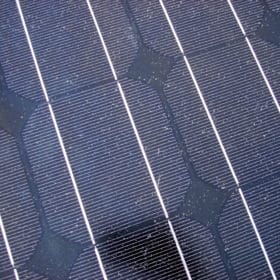
British scientists have developed an experimental compressed air system for the simultaneous cleaning and cooling of PV modules. The system was built with a compressed-air unit which was made of a compressor, an air tank, and an airflow regulation valve, and a series of nozzles. The technique was tested on a PV system located in northwestern India.
Chinese PV Industry Brief: New 5 GW heterojunction solar module factory, increasing wafer and cell prices
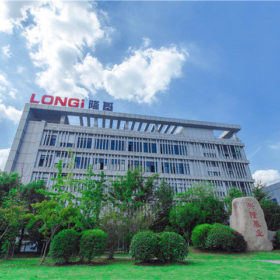
China-based wind turbine manufacturer Mingyang Smart Energy wants to build a heterojunction module factory with a capacity of 5 GW. Both Longi and Tongwei have raised the prices of their wafers and cells, respectively.
Daqo opens Xinjiang polysilicon factory to international observers
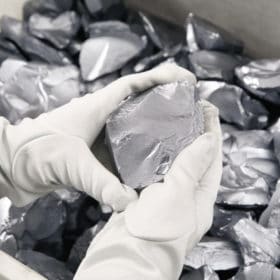
The polysilicon manufacturer has once again rejected allegations of forced labor by opening the doors of its factory in China’s Xinjiang Uyghur Autonomous Region to international investors and journalists. Video footage of the event was published by the company on its website.
Canadian Solar invests in British ‘merchant battery’ AI company
Oxford-based Habitat Energy uses machine learning algorithms, artificial intelligence (AI) and its own trading platform and software to maximize profits from utility scale storage facilities. A Canadian Solar statement about the arrangement, issued today, contained no financial details about the co-operation.
EU carbon price running at level not expected until next year
Emissions permits are selling at around €50 per ton, completing a rally from last year’s Covid-driven slump faster than expected by business respondents to the 2021 Refinitiv Carbon Market Survey.
