
Estonian renewables auction attracts 17 bidders
The winners in the Baltic nation’s first clean energy auction will be announced by June 20. With the exercise rated according to the expected output of the facilities allocated, the government has committed to procure 5 GW worth of facilities, from a total 16.3 GW offered by bidders.
New kesterite solar cell with 8.7% efficiency
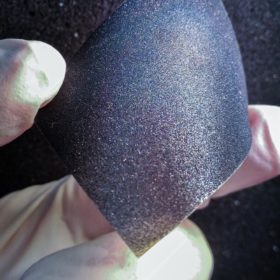
Estonian researchers have developed a new monograin powder technology made of microcrystals, which can form parallel connected miniature solar cells in a large module. By replacing copper with silver in the absorber material, the researchers were able to increase the efficiency of the cells by more than 2%.
Europe on track for decade-topping 16.7 GW of new solar this year
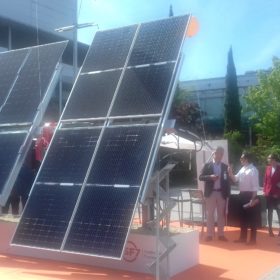
Trade body SolarPower Europe’s preliminary statistics suggest this could be the continent’s best year for PV since 2010, with capacity additions set to soar 104% year on year. Spain is leading the way with an expected 4.7 GW of new solar, followed by Germany, with 4 GW.
Estonia launches competitive renewables auctions
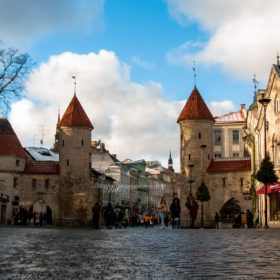
With the market all but grinding to a halt this year after an incentive scheme expired, the government has launched a new capacity procurement system. PV could be a winner in the first auction round but, as of 2021, solar could face stiff competition from wind and biomass.

Rooftop PV has reached grid parity in main EU markets
Researchers have developed a high-resolution geospatial method of assessing the solar potential of all buildings in the EU and concluded rooftop PV could provide a quarter of the bloc’s electricity needs. The scientists say grid parity for rooftop solar has been reached outside eastern member states with cheap fossil fuel electricity.
EU call for energy infrastructure proposals backed by €750m of funding
Under its Connecting Europe Facility (CEF), the bloc has opened another call for applications to build cross-border energy infrastructure projects. It has already agreed to provide a grant of €323 million to synchronize the regional grid in the Baltic States.
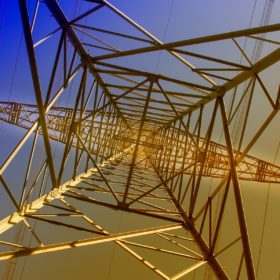
EU clean energy transition receives an €800 million boost
The funds will come from the Connecting Europe Facility. Around €504 million will be used for electricity infrastructure and smart grids and another €286 million will be devoted to gas. The remaining €9 million will be allocated to studies on the development of carbon dioxide transport infrastructure.

Solar installations see an unprecedented boom in Estonia
The Baltic nation installed 90 MW of PV last year, four times more than it had done since it began adopting solar. The growth was down to a new regulation issued by the government in June and the big push came mainly from small installations.
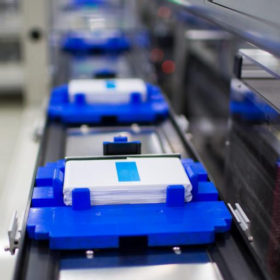
Europe moves further towards large-scale battery cell production
More than a dozen European ministers of economic affairs have released a statement setting out the next steps to turn Europe into an industrial hub for large-scale cell production. The role of SMEs and competition was highlighted as ministers said European cells should provide innovation in terms of raw material use and sustainability, hinting at a pivot away from lithium-ion.
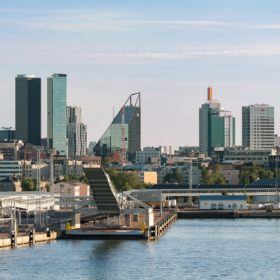
Project targets nationwide tokenization of Estonian grid through blockchain
Blockchain innovator WePower and Estonian transmission system operator Elering have partnered to tokenize the Estonian grid using an Ethereum blockchain. The project is pilot, but its initiators say it could provide tangible data for bringing the technology to markets worldwide.
