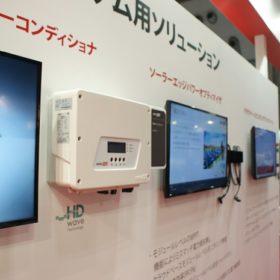
All metrics point upwards as SolarEdge posts strong 2017 financials
The Israel-headquartered producer of power optimizers and inverters enjoyed a record year in 2017, increasing revenue by 24% to US$607 million and shipping more than 2.5 GW of inverters worldwide.

JA Solar supplies mono PERC modules to 35 MW Israeli PV plant
The Ashalim solar park is a 250 MW project that will combine concentrated solar power and photovoltaics once completed. JA Solar is sole supplier of the PV modules.
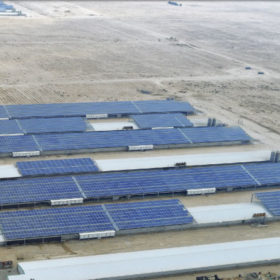
Israel to reintroduce FITs for rooftop PV up to 50 kW
A new scheme aimed at supporting all rooftop PV segments is expected to be launched soon by the government. The new mechanism includes net metering, although with an additional grid fee covering storage costs, and FITs for small-scale solar. The government is also planning new auctions for rooftop solar geared towards new models of entrepreneurship.
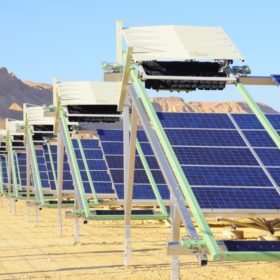
Module cleaning firm Ecoppia raises $13m in funding
The Israeli robotic cleaning specialist for the solar industry has completed a new funding round that will support the firm’s global expansion, meet growing demand and boost R&D.

Israel: 120 MW solar plant to be constructed by Belectric Isreal and Solel Boneh
Shikun & Binui Renewable Energy Ltd, the renewable energy arm of Israel conglomerate Shikun and Binui will own the plant, which will be located near the village of Zeélim.
Record quarter for SolarEdge as firm registers 22% growth in Q3
Revenue for the Israeli power electronics company rises 22% sequentially in third quarter to reach $166.6 million. More than 676 MW of inverters shipped helped drive gross margin of 34.9%.
Ellomay buys 9 MW in Israel
Through this transaction, the Israel-based solar company has raised the capacity of its PV plant portfolio to 39.5 MW.
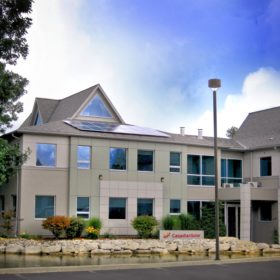
Canadian Solar signs deal to develop projects in Israel
Tier-1 module manufacturer Canadian Solar has announced joint venture between its wholly owned subsidiary in Israel and Menora Mivtachim, one of the country’s largest finance and insurance groups. The aim of the venture is to finance, develop, construct and own solar power projects in the Middle Eastern nation.

Israel to hold tender for over 150 MW of large-scale PV in July
In the latest tender for PV projects up to 12 MW held in March, the Israeli government allocated around 235 MW of solar capacity. Overall, the Middle Eastern country has reached cumulative PV capacity of over 900 MW.
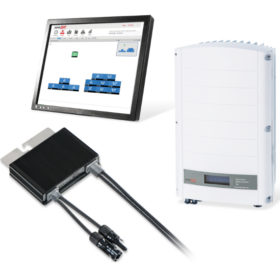
SolarEdge Q2 2017 financials show record 35% gross margin
Israeli module level power electronics firm posts highest gross margin to date despite slowdown in U.S. residential market, which remains the firm’s chief revenue stream.
