
Large-area graphene-perovskite solar modules with better temperature coefficient
An Italian-Greek research group has developed a large-area perovskite solar panel with graphene-doped electron transporting layers. With increasing temperatures, the module exhibits a smaller drop in open-circuit voltage than commercially available crystalline silicon panels.
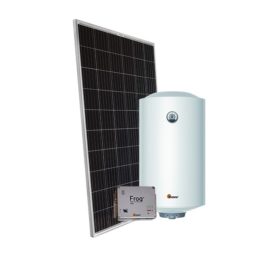
Photovoltaic water heater from Italy
Italian solar panel manufacturer Sunerg has developed an integrated photovoltaic water heater solution based on two resistances. The system relies on a maximum power point tracking (MPPT) controller and can work with a PV module with a power output of up to 450 W.
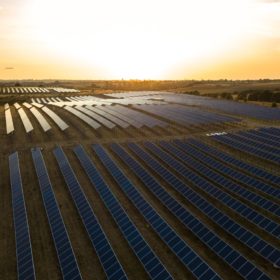
KGAL secures approval for 380 MW of solar projects in Italy
The German renewable energy investment firm plans to build three unsubsidized solar parks in the regions of Sicily and Latium. The facilities should begin commercial operations in the first quarter of 2024.
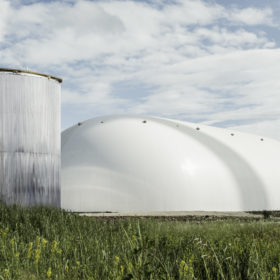
Large scale CO2 battery facility comes online in Italy
Energy Dome built its first pilot facility in the Italian province of Nuoro. It said the battery was performing under the expected standards for both long-duration and round-trip efficiency and that it plans to build another full-scale commercial facility with a capacity of 20 MW/200 MWh by the end of 2023.

Italian government expects 3.37 GW of new solar capacity for 2022
The Italian Minister of Economic Development, Roberto Cingolani, expects around 5.1 GW of new renewable energy capacity to be connected in Italy this year. This impressive growth should be triggered by more favorable permitting processes.
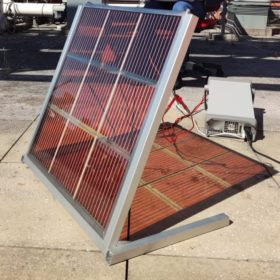
Semitransparent dye-sensitized solar module for BIPV applications
Scientists in Italy have developed a module with an area of 0.2 sm and an efficiency of 2.7% in outdoor conditions, with a tilt angle of 60 C. They designed it by considering the trade-off between low losses and device sturdiness.
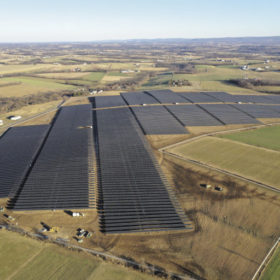
Italy allocates 300 MW of solar in latest renewables auction
Italy’s energy agency has awarded 300 MW of solar capacity at 34 locations, but it only selected a 6 MW wind project in its latest auction. All developers offered a maximum discount ranging from 2% to 3.02% off the auction ceiling price of €0.065 ($0.07)/kWh.
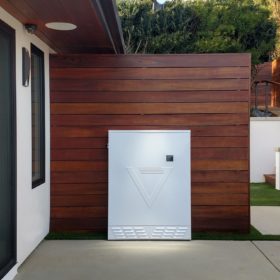
Italian solar survey indicates rise of energy storage
Just one professional among 100 interviewed for an annual EUPD Research survey said they had no plans to offer storage products. Almost half the respondents to the German market data company said they offer e-mobility-related technology.
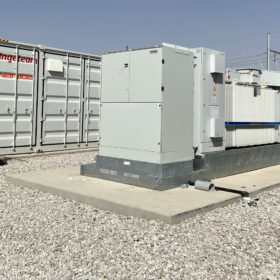
Ingeteam touts Italy’s largest storage system
Spain’s Ingeteam will supply a 70 MW/340 MWh facility based on almost 60 lithium-ion containers to provide storage services to the grid.
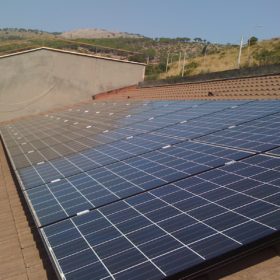
Italy hits 572 MW/977 MWh of distributed storage capacity
Italy added 123 MW/263 MWh of energy storage capacity in the first quarter. Energy storage continues to grow in the country, with the regions of Lombardy and Veneto being the two largest contributors.
