
Italy could become vital hydrogen hub between North Africa and Europe
Italian hydrogen and fuel cells association H2IT is urging the national government to support investment in green hydrogen and ensure medium-long payback periods. The trade body’s goal is to build large-scale electrolyzers (>100 MW) to decrease green hydrogen’s price below €2.0/kg.
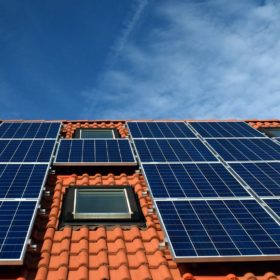
Italy has 189 MW/295 MWh of distributed storage capacity
The country added around 73.5 MW/109.2 MWh of new, small-sized storage capacity in 2020. Most of the batteries are in Lombardy and Veneto, where rebates are being offered.

Flexible perovskite solar module with 10.5% efficiency
The methylammonium-free inverted solar module was built on a flexible substrate made of polyethylene terephthalate (PET). A hole transporting material made of poly(triarylamine) (PTAA) and a double-cation cesium formamidinium (CsFA) perovskite layer were deposited through blade-coating and nitrogen-assisted blade-coating.

Deploying solar on bridges
A bridge crossing the Pò river in San Mauro Torinese, in northern Italy, is set to host a 300m long PV system designed to rely on special mounting structures and full-black modules. The local administration said the bridge was chosen as the rooftops and surfaces available are all located in landscape protection areas adjacent to the town’s most important historic building.
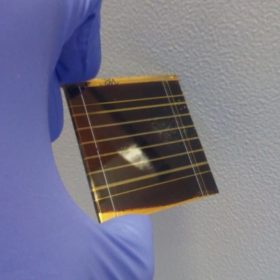
Perovskite solar panel with 16.1% efficiency via ambient air blade-coating
The panel, fabricated by scientists in Italy, is composed of five series-connected cells, each with an area of 2.01 cm² and has an aperture area of 11 cm². It showed a power conversion efficiency of 16.1%, an open-circuit voltage of 5.59 V, a short-circuit current of 37 mA, and a fill factor of 72.5%.
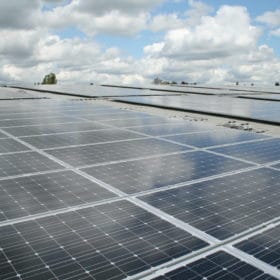
Transposition of new EU laws could increase scope of energy communities in Italy, says ENEA
Energy communities, recognized and supported in Italy’s National Recovery and Resilience Plan, could soon increase their role in the country’s energy transition, Italian research agency ENEA told pv magazine.
Italy installed 152 MW of PV in Q1 2021
The country installed 35 MW more solar in the first three months of the year than it did in the same period a year earlier. Its cumulative capacity surpassed 22.1 GW by the end of March.
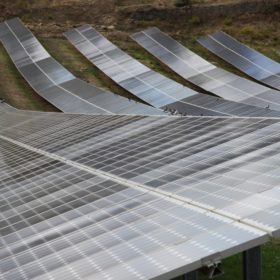
Analysis of Italy’s disappointing fifth renewables auction
“RES1 has not worked,” said operators commenting on Italy’s auction scheme for renewables. The lack of concrete projects to be submitted to the auctions is due to a combination of factors primarily based on “excessive bureaucracy,” and the impossibility of ground-mounted PV projects in agricultural areas to get incentives, they added. Nonetheless, things could soon change, especially if an RES2 scheme is implemented.

Europe’s largest shipbuilder wants to set up 2 GWh lithium-ion battery production
Italy’s Fincantieri has joined forces with Faist Group to produce lithium-ion batteries. Through the joint venture Power4Future, the two companies want to reach a production capacity of 2 GWh over the next five years.
Falck Renewables secures 10-year PPA for 41 MW solar plant linked to 10 MW/20 MWh of storage in Italy
Through the 10-year power supply deal, the renewable energy company will sell the power generated by a 41 MW solar park located in the southern region of Apulia to the Italian unit of Belgium-based chemical company Solvay. The solar plant is planned to be linked to 10 MW/20 MWh of storage.
