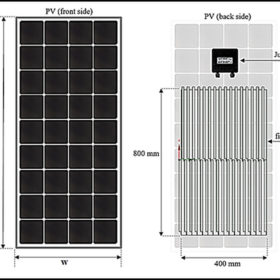
Multi-level fin heat sinks for solar module cooling
Developed by Malaysian scientists, the proposed multi-level aluminum fin heat sinks (MLFHS) were found able to reduce the module operating temperature by up to 8.45 degrees Celsius and increase power yield by up to 10.75%. The system cost was estimated at $0.60/W.

Heat-protective film to reduce solar module temperature by 3.5 degrees Celsius
An international research team has tested a holographic film based on prismatic concentrators that was presented by Russian scientists last year and is claimed to significantly reduce the operating temperature of solar modules, including that of thermal-photovoltaic devices. According to the new findings, the film is able to lower the operating temperature by around 3.5 degrees Celsius.

New tool to understand component failure rate in PV-related fires
Scientists have developed a new model based on fault tree analysis to evaluate the frequency of fires caused by rooftop PV systems and assess system safety and reliability. They claim that the new tool has the potential to identify fault linkages in systems, highlight failure patterns before they arise, and compare multiple designs for safety.

Malaysia launches scheme enabling consumers to buy renewable energy
Through the Green Electricity Tariff (GET) program, the government will offer 4,500 GWh of power to residential and industrial customers each year. These will be charged an additional MYE0.037 ($0.087) for each kWh of renewable energy purchased.
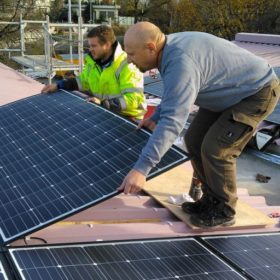
Solar job numbers kept on rising in 2020
The latest edition of a clean power jobs survey produced by IRENA and the International Labour Organization has stressed the important role which will need to be played by the public sector if the energy transition’s employment benefits are to be shared equally.

China holds the key to cancelling half the world’s new coal project plans
With pressure mounting on the world’s governments to turn their back on the fossil fuel, China and peers in South East Asia, Europe and South Asia could help deliver a coal-free future at the COP26 climate summit planned in Glasgow in November.

Malaysian utility agrees to buy power from 500 MW of solar plants
Ten 50 MW projects will be developed in four states after a tender held last year.
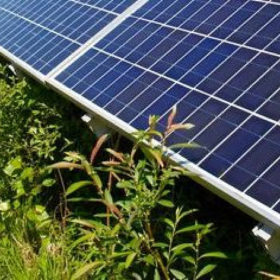
Cooling PV modules with plants, coir pith
An Indian-Malaysian research group has investigated the effectiveness of several passive cooling techniques for solar panels, including the placement of plants around the modules or coir pith underneath them, both of which, surprisingly, offered good performance in terms of temperature reduction and power yield.

Bidders plan to use ‘brown power’ to balance intermittency of solar in Singapore’s clean power tender
Solar developer NEFIN and electric company Tuas Power have tabled a joint bid to secure the rights to supply 100 MWh of ‘zero-carbon electricity’ from Malaysia to Singapore and said they initially intend to use “brown power” to secure supply during non-solar-generation hours.

Nanocomposite films for 13.57%-efficient organic solar cell
Scientists in Malaysia have used, for the first time, nanocomposite films based on zinc oxide and polyvinyl alcohol in organic solar cells. These films were able to improve the efficiencies of the PV devices by up to 3.5%.
