Canadian Solar sees turnover and profits retreat
The Chinese-Canadian manufacturer reported a 1% decrease in sales in the third quarter, with net profit falling 19%, to US$55.2 million. Quarterly shipments were up significantly year on year, from 1.59 GW in July-to-September last year to 2,387 MW this time around. The company expects to ship up to 8.5 GW of panels and achieve turnover of up to US$3.16 billion this year.
IRENA predicts LCOE of solar will drop to $0.01-0.05 by mid century
The latest study published by the International Renewable Energy Agency says the average solar electricity cost of $0.085/kWh produced by projects commissioned last year is set to fall to $0.048 next year, and $0.02-0.08 by 2030.

Renewables and geopolitics: The United States
An accelerated transition to renewables could go either way, regarding the United States’ unique geopolitical strength. According to Indra Overland – head of the Center for Energy Research at the Norwegian Institute for International Affairs – the U.S. could surrender a major advantage if it abandons fossil fuel. The nation could, however, remain dominant in the global energy sector if it continues to lead on innovation and clean energy tech-related intellectual property.

IEnova secures 15-year power deal for 150 MW solar park in Mexico
The project the company is developing in Juárez will sell energy to the Mexican department store chain El Puerto de Liverpool through a 15-year PPA for the second contract of the type IEnova has secured with the group.

Mexico may resume cancelled energy auction
Energy minister Norma Rocío Nahle García yesterday announced the tender round believed to have been cancelled in January had merely been held up by the inability of power lines to cope with new generation capacity. The minister added, expanded nuclear capacity is under consideration.
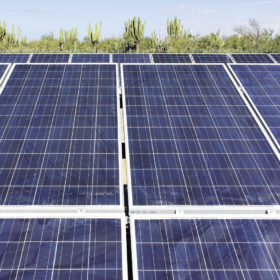
The weekend read: Reactivating Mexico’s large-scale sector
The Mexican electric power industry is maintaining its dynamism, despite a collective perception of inactivity stemming from a lack of information from the federal government. And renewables are barely mentioned in the National Development Plan for 2019–2024 drawn up by Mexican President Andrés Manuel López Obrador.

Distributed generation growing in Latin America
In the early years of the 21st century, distributed generation systems in Latin America were mainly installed off-grid in remote rural areas, writes Maria Chea, solar analyst at IHS Markit. As the El Niño phenomenon and high oil prices continued to exacerbate high electricity prices and power shortages, governments began to turn their attention to distributed generation, including PV systems, to assuage strains on their national grid networks.

Solar industry counts seven human rights allegations
The Business & Human Rights Resource Centre has published a report looking at the human rights due diligence performance of the renewables industry and examined individual generation methods. The report finds that, while the solar sector is not top of the sad list, its vest also isn’t completely unstained.

New political dimension in Mexico
In the first part of pv magazine‘s series on solar’s hidden champion markets, we take a look at Mexico. The country currently has 4 GW of total installed PV capacity, and overtook Chile as Latin America’s largest solar market by the end of 2018. But the cancellation of auctions and other negative signals from government could put a damper on things moving forward.
Ganfeng Lithium wagers $28m on Sonora lithium deposits in Mexico
The Chinese lithium-ion battery producer has taken significant stakes in two U.K. entities associated with a mine which could hold up to 8.8 million tons of the raw material in clay deposits.
