Jenny Chase predicts up to 194 GW of solar this year
Falling module prices will help PV post another record year after an estimated 132 GW was installed worldwide in 2020, according to an energy transition investment trends report published by Bloomberg New Energy Finance.
IFC says green recovery could drive $2.5tn renewables market this decade
The private-sector arm of the World Bank, which claims to leverage $3 of its own capital and $8 from third parties for every dollar invested in its blended finance funds, has attempted to quantify what devoting Covid recovery funds to green investment would mean for emerging economies.

Turkish PV manufacturer report reveals country’s annual production capacity is 5,610 MW/year
In September 2020, Stantec Turkey launched a market assessment report for the Turkish solar PV panel manufacturing sector. The English version of the “Market Report for Turkey’s Photovoltaic Panel Manufacturing” followed in November. The report, based on collected data from local manufacturers, depicts the history of the market since its inception in 2011 and provides unique insights into its development and future potential.
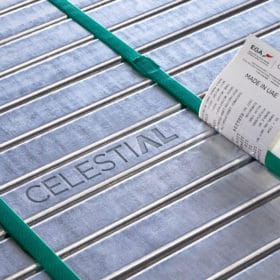
UAE says Mohammed bin Rashid solar park is powering aluminum production
A press release issued by utility DEWA and the state-owned metal manufacturer today implied production of solar-powered aluminum is already taking place.

Turkey added 672 MW (AC) of PV capacity in 2020
According to official statistics from grid operator TEIAS, the country’s cumulative PV capacity reached 6.66 GW at the end of December.
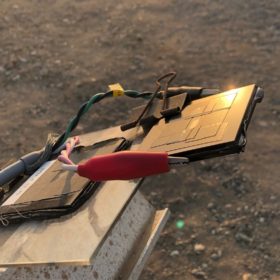
Bifacial perovskite-silicon tandem cell with 25.2% efficiency
International researchers have developed a silicon heterojunction PV cell with textured surfaces to accommodate the perovskite top cell. They optimized the rear transparent electrode to collect as much albedo as possible and achieved five different perovskite bandgaps by altering the iodide-to-bromide ratio in the perovskites, resulting in a higher open-circuit voltage.

Turkey to hold 1 GW solar tender between March 8-12
The tender will be open to PV projects ranging in size from 10 to 20 MW. The Turkish government has set a ceiling price of TRY0.35 ($0.047)/kWh for the procurement exercise. The selected facilities will be located across 74 grid connection points and will have to rely on locally produced modules.

Saudi Arabia commissioned no solar projects last year
Plunging regional solar tariffs reportedly prompted attempted renegotiations of agreed solar power prices with the result the kingdom made no progress towards its renewable energy goals in 2020.

Herbicide may improve organic cell efficiency by up to 1.6%
Researchers in Saudi Arabia claim to have increased the efficiency of organic PV devices with diquat, a compound used in herbicide. The molecular diquat dopant increased optical absorption and the lifetime of electrical charges when light was absorbed.

Confusion surrounds Kuwait’s mega solar plans
The state-owned Kuwait Petroleum Corporation has reportedly ended its involvement with the gigawatt scale Dabdaba solar field and asked the national body responsible for drumming up private sector investment to merge it with the 2 GW Shagaya renewables development.
