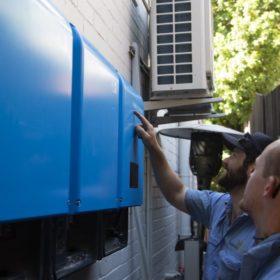
More than half of Australian PV installers moving into storage
The number of solar installers in Australia offering storage solutions grew considerably in 2021 and promises to surge again this year, according to a survey by EUPD Research.
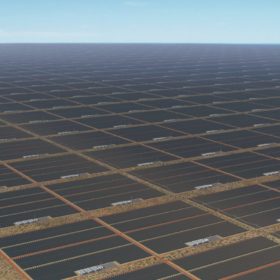
Sun Cable reveals full extent of its giant solar-plus-storage project in Australia
Singapore-based Sun Cable has submitted its Environmental Impact Statement to the Northern Territory Environment Protection Authority. The document reveals the full extent of the project’s enormity, specifically a 17-20 GW solar farm tied to 36-42 GWh of battery energy storage, which is set to be transmitted by subsea cables to Singapore.
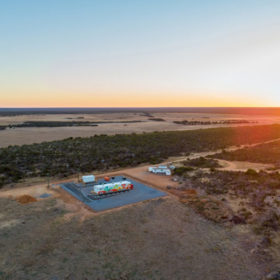
Australian town to be powered by pumped-hydro microgrid
The town of Walpole on Western Australia’s southernmost tip will soon be powered by a pumped-hydro microgrid, a first for the state which is already renowned for its rollout of microgrids and distributed renewable solutions.
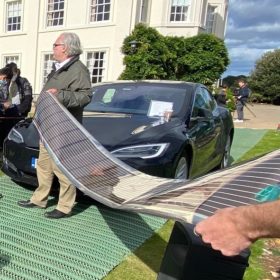
Printed solar panels for Tesla’s journey around Australia
Commercially printed solar cell technology developed by the University of Newcastle is being put to the test to power an electric vehicle’s 15,097-kilometre journey around the entire coastline of Australia.
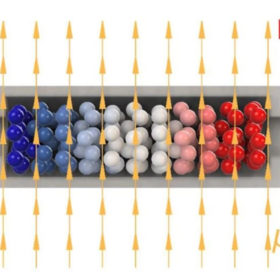
The Hydrogen Stream: Magnetic alloys for efficient hydrogen cooling
While a Japanese team developed a series of Er(Ho)Co2-based magnetic cooling alloys for hydrogen cooling, a US research team used a “simple” acid treatment to increase flow of hydrogen atoms within protonic ceramic electrochemical cells (PCECs). Hydrogen-fuelled mobility registered significant developments: the first hydrogen-electric passenger aircraft was piloted between two major airports in Germany, and a 75-passenger ferry service in the San Francisco Bay braces for operations in June.
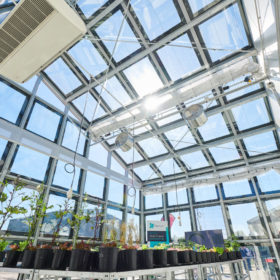
Solar greenhouse trials perform better than expected, proving commerciality company says
The results from solar glass company ClearVue’s greenhouse trials at Murdoch University have found the company’s product performed better than predicted overall, demonstrating both strong power generation and thermal value.
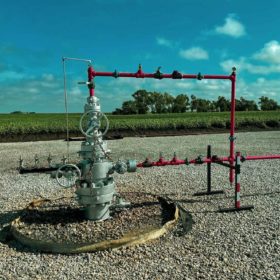
Natural hydrogen – how it works and why companies are interested
Natural hydrogen is piquing interest. Sometimes referred to as “gold” or “white” hydrogen, natural hydrogen plants offer smaller carbon footprints than sprawling green hydrogen projects, with faster development times, according to Avon McIntyre, executive director of HyTerra.
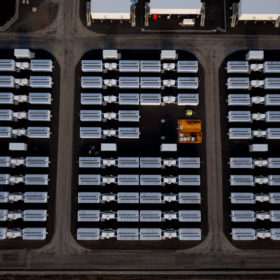
Neoen, AGL sign Australia’s first grid-scale virtual battery contract
French renewable energy developer Neoen has signed a seven-year agreement with Australian utility AGL to provide 70 MW/140 MWh of virtual battery capacity in New South Wales.
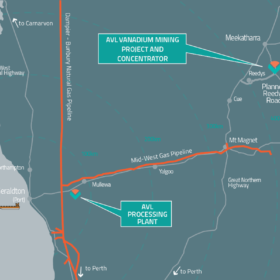
Globally significant vanadium mine in Australia ‘bankable,’ construction slated for 2023
A major Western Australian mine targeting the global vanadium battery market was this week found to be bankable, with feasibility studies confirming the project’s “strong commercial case for development,” its owner Australian Vanadium Limited said.
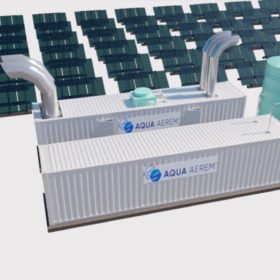
Massive Australian green hydrogen project moves forward with new Japanese partner
Water-from-air technology company Aqua Aerem’s Desert Bloom green hydrogen project received Major Project Status from the Northern Territory government last year. It has now announced a partnership with Japanese energy giant Osaka Gas that not only brings the 10 GW project closer to reality, but has also seen the company boost its ambitions to 20 GW in light of “quickly developing demand.”
