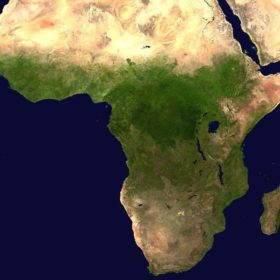
‘African countries must unite to establish a green hydrogen economy’
Only by working together can African nations overcome the obstacles to exploiting their abundant renewables resources and producing affordable green hydrogen – for use at home and in a European economy keen to wean itself off Russian gas, an online event has been told.
African Development Bank offers local-currency credit to Nigeria’s clean power developers
Lack of locally-denominated finance, and of sufficiently long-term loans, are well established hurdles to the development of photovoltaics in Africa.
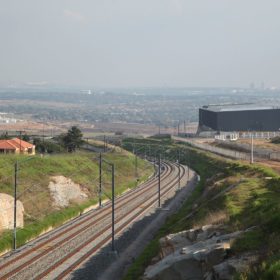
Solar for train traction in South Africa
The Development Bank of South Africa (DBSA) is seeking consultants for the deployment of 3MW of solar capacity to supply power to the traction system and some stations of the Gautrain system – an 80km railway in Gauteng linking Johannesburg, Pretoria, Ekurhuleni, and the O.R. Tambo International Airport.
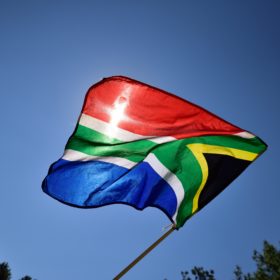
Sola Group secures PPA for 200MW of solar capacity in South Africa
The planned solar capacity should be fully operational by the fourth quarter of 2023. Titanium products provider Tronoxhe will purchase the electricity.
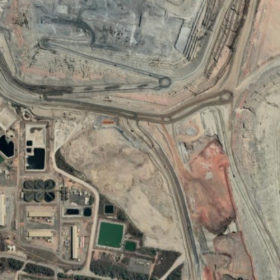
Copper miner plans solar and wind capacity in Zambia
Canadian company First Quantum Minerals will commission 430MW of photovoltaic and wind generation capacity from Total Eren and renewables-for-African-mining specialist Chariot Transitional Power.
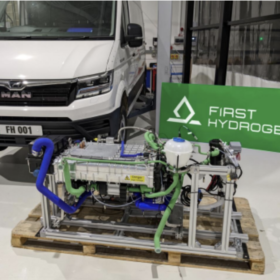
The Hydrogen Stream: New fuel cell electric vehicle from Canada
Elsewhere, the Fraunhofer ISE research institute has unveiled a new tool for high-resolution power-to-X kinetic analysis, and German entities have signed partnership agreements with the Abu Dhabi National Oil Company.

Mauritius launches tenders for 140MW of solar-plus-storage
Through two different procurement exercises, the archipelago’s Central Electricity Board seeks to reduce its dependence on fossil fuels.
GCL shifts emphasis to green hydrogen as gas supply deal falls through
Previously announced plans by the solar developer to pay a deposit to secure gas from a connected business expired on Friday and the company has now said it will focus on a form of the energy carrier powered by renewables.
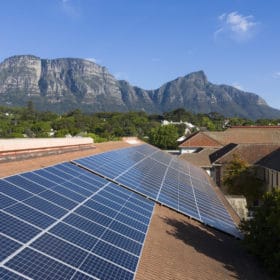
World Bank notes potential for 210,000 mini-grids this decade
The international development entity has already invested $1 billion in local, off-grid electricity networks over the last decade – and attracted a further $1.1 billion in matched funding – and has predicted mini-grids could supply electricity to 490 million people by 2030.
South African platinum mining company wants to deploy 75MW of hybrid wind-solar
South African platinum miner Sedibelo Platinum wants to deploy a 40MW hybrid wind-solar plant and a 35MW photovoltaic park to power its operations across several sites. The plants will be owned and operated by Sturdee and will supply power to the mining facilities via power purchase agreements.
