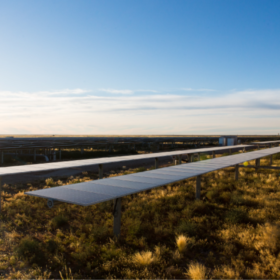
Reports of backsheet failures at 75 MW Mulilo Sonnedix Prieska solar farm in South Africa
The South African project is reportedly experiencing serious problems due to premature module degradation. Claims of extensive backsheet failure have emerged and it is said widespread module replacement will be required. The modules used in the project were supplied by Chinese manufacturer BYD and South African producer Artsolar.

New impetus for Ghana’s solar ambitions
The government has announced 17 MW of utility scale solar is under construction and the Ministry of Energy is seeking consultants to help promote mini-grids and solar net metering.
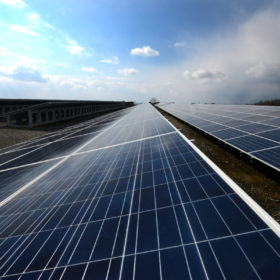
Construction starts on 50 MW PV plant in Togo
The 50 MW Sheikh Mohammed Bin Zayed photovoltaic power plant is located in the Blitta region. The plant is being built by Amea Togo Solar – a subsidiary of Amea Power, a global renewables developer based in the United Arab Emirates.
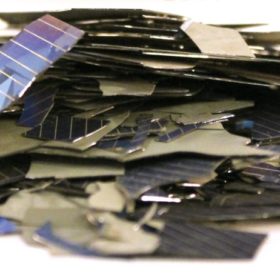
Italian PV panels sent for recycling were instead smuggled to Syria and Africa
Illegally re-badged panels were sold on to Senegal, Burkina Faso, Nigeria, Morocco, Mauritania, Turkey and even Syria. Italian authorities found 60 tons of panels which will be examined.
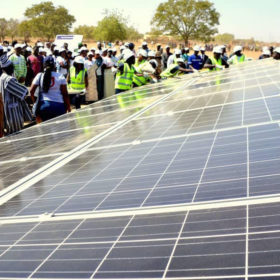
Work begins on 30 MW solar plant in Burkina Faso
Electricity generated by the facility will be sold at $0.08/kWh to national utility Sonabel. Burkina Faso recently adopted a solar-oriented energy policy.
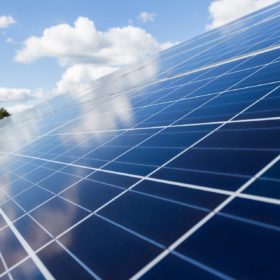
Eskom seeks modules and mounting structures for off-grid project
The South African utility is seeking offers for the supply of 1,383 320 W polycrystalline modules and mounting structures, to be used for the construction of four off-grid PV projects at its research center.
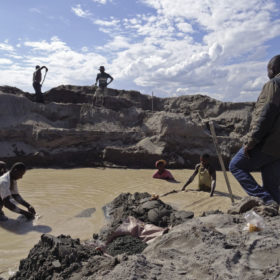
The weekend read: Ethical strategies for cobalt supply
Since 2016, Amnesty International has denounced cobalt mining in the Democratic Republic of Congo for human rights violations and the use of child labor. This has led LG Chem and other companies to insist on standards for battery cell suppliers, as a step toward improving the situation.
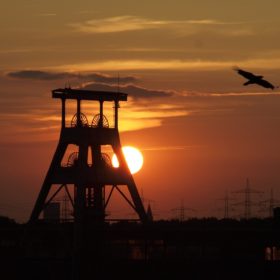
South African mining sector wants solar
The Minerals Council South Africa has urged the government to solve the country’s energy crisis by adding more power generation capacity from both distributed and large-scale renewables. Meanwhile, several mining companies operating in South Africa are planning their own big solar parks, including two 200 MW facilities under development by Sibanye-Stillwater and Vedanta.
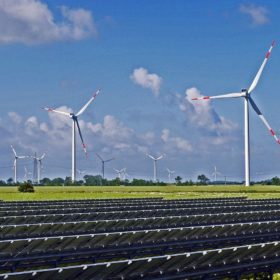
Choosing the best site for wind and solar with fuzzy logic
An international research team is proposing a fuzzy logic approach for optimal site selection of large-scale wind, solar and hybrid wind-solar power projects. The new methodology is based on criterial components for energy optimization through climatological, topographic and human factors.

Benin introduces VAT exemption on imports of PV panels
The exemption will be applied to the import of materials, equipment and installation accessories for the deployment of PV and solar thermal systems. The new measure is aimed at increasing access to electricity through more off-grid projects.
