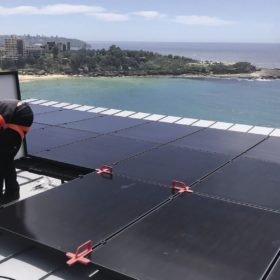
Making the business case for solar-plus-storage
Much has been said about the benefits installing solar and batteries can offer to businesses but, as companies face mounting input cost inflation, is the upfront investment too much to bear or have volatile electricity costs made the decision a no-brainer?
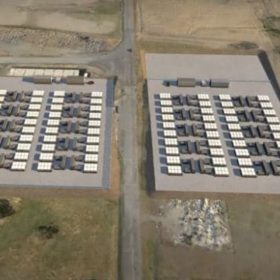
Australia’s AGL secures planning approval for proposed Loy Yang big battery
Australia’s largest energy gen-tailer, AGL, says it has received approval for a 200 MW/800 MWh grid scale battery to be developed at the site of its coal-fired Loy Yang power station in Victoria’s Latrobe Valley.
Grid connection is key culprit as investor confidence wanes in Australia
Ongoing grid connection issues and concerns about Australia’s unpredictable regulatory and policy environment have been identified as the key culprits with a new report revealing investor confidence in the nation’s renewable energy sector has slumped to a five-year low.
Australia a key player in new Global Power System Transformation team of 6
This week will see the official launch of a global taskforce that aims to support worldwide uptake and integration of renewables and achieve at least 50% reduction in emissions over the coming decade.
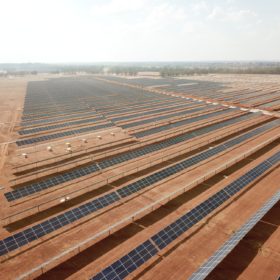
Fotowatio secures financing for 90 MW solar plant in grid-challenged southeastern Australia
Sustainable intentions come together in the signing of a green loan to fund ongoing development of FRV’s Sebastopol Solar Farm, which lender ING says contributes towards its ‘ambition to align our lending portfolio with the Paris Agreement goals.’
Grid constraints threaten to curtail more than 1 GW of solar projects in North Queensland
The northern Australian region this week added nine solar plants to the two already threatened – along with a wind farm – with having their output halted under certain conditions.
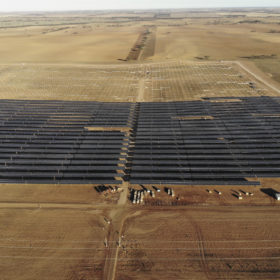
Australian state frees itself from federal shackles to unlock more grid capacity
The government of Victoria has decided to break from national electricity rules and introduce legislation to fast-track priority projects such as grid scale batteries and transmission upgrades, and make room for more large scale solar and wind. The announced reforms have prompted a flurry of reaction.
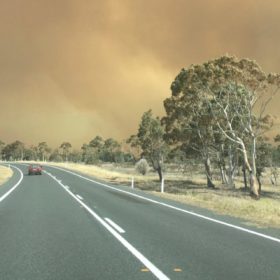
Where there’s smoke… there’s reduced PV output
A minor concern it may be, compared to the tragic loss of life, livelihoods and biodiversity caused by the bushfires still ravaging parts of Australia, but reduced output by PV systems due to smoke haze is an unwelcome bi-product of blazes that have burned at a scale and ferocity never seen before.
Solar-plus-storage will start to make big inroads in the year ahead
By this time next year we may be able to wave goodbye to that old chestnut about renewables endangering security of supply. Elsewhere, the price of lithium – and the products it goes into – could go either way after tanking this year.
PV investment confidence continues to slide in Australia
A new survey by the Melbourne-based Clean Energy Council shows that confidence in new clean energy investment has continued to weaken over the past six months. While a majority of Australian industry representatives expect to hire more people over the next 12 months, the biggest challenges to developing new projects remain unchanged, with the grid connection process, technical requirements, and policy uncertainty at the top of their list of concerns.
