
GCL enters ‘final phase’ of its great project sell-off
The solar farm development unit owned by the poly maker sold off 2 GW of photovoltaic generation capacity in China in the first six months of the year but has confirmed more sales lie ahead.
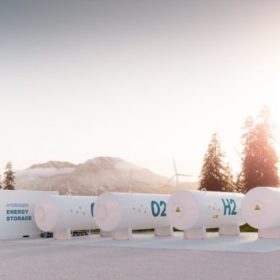
The Hydrogen Stream: 2 GW green hydrogen project in Chile, new push from South Korea
Furthermore, the Indian government is proposing to mandate using green hydrogen in fertilizer and refining and Japanese automotive manufacturer Toyota wants to assemble integrated dual fuel cell (FC) modules in the United States.

The Hydrogen Stream: Green hydrogen for Italy’s Apennine railway, new plans from Ukraine, Estonia, Canada
Spanish energy giant Iberdrola will lead a consortium that plans to convert the Apennine railway axis in central Italy to green hydrogen. Ukrainian energy company NJSC Naftogaz has said it wants to produce green hydrogen with a German partner, and the Port of Tallinn, in Estonia, wants to become a hydrogen hub.

The Hydrogen Stream: big push from UK, European Union
U.K. business and energy secretary Kwasi Kwarteng has unveiled a new hydrogen strategy aiming at developing both the green and blue forms of the fuel. Furthermore, Thierry Breton, the EU commissioner for the internal market, has said Europe needs to increase its commitment to hydrogen and use nuclear to produce a decarbonized form of the gas.
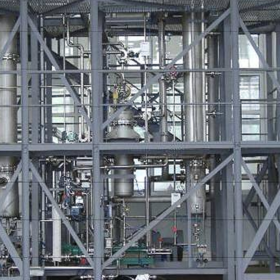
Blue is not the new green
A new study from Stanford University and Cornell University shows that blue hydrogen can produce more greenhouse emissions than heat produced by coal and gas. The modeling classifies blue hydrogen emissions as carbon dioxide and unburned fugitive methane, as well as lifecycle emissions linked to the mining, transport, storage, and use of methane.
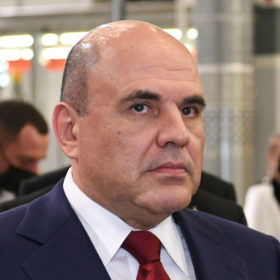
The Hydrogen Stream: Russia unveils hydrogen strategy, Germany provides more funds for power-to-X
ThyssenKrupp has also said it is working on a green hydrogen and ammonia project in the Emirates and three U.S. companies are planning to develop low-cost renewable hydrogen generation for use in transportation and distributed energy applications.

The Hydrogen Stream: Plans for $75bn, 50 GW green energy hub in Western Australia
Plus, as the European Commission prepares to present its ‘Fit for 55’ climate change package tomorrow, European companies are continuing to develop hydrogen plans, including Shell in Norway and Siemens in Germany.

The Hydrogen Stream: Chile and Germany join forces to develop viable green hydrogen projects
Furthermore, Texas oil field services company Baker Hughes and engineering, procurement and construction company Samsung Engineering have announced a collaboration with regards to low to zero-carbon projects utilizing carbon capture, utilization and storage (CCUS) and hydrogen technologies.

The Hydrogen Stream: An electrolyzer factory in France, a 100 MW electrolyzer in Portugal
Belgian mechanical engineering group John Cockerill wants to set up its electrolyzer gigafactory for the production of green hydrogen in northeastern France. Galp Energia plans to install a 100-megawatt electrolyzer to power its refinery in Sines, Portugal, with green hydrogen, by 2025.

The Hydrogen Stream: US government wants to reduce green hydrogen cost by 80% to $1 per kilogram in one decade
Furthermore, Swiss energy company Axpo and Swedish-Swiss electrical equipment giant ABB committed to combining their technologies and skills for several projects related to green hydrogen in Italy and Germany’s gas transmission system operators Gascade and Ontras announced a plan to set up a platform for the hydrogen industry in eastern Germany, with an initial grid to cover 475 kilometers of pipelines.
