
Solar companies consider reduced income to help UK households
Solar Energy UK members have made positive noises about a plan to shift historic, fixed-payment incentive contracts over to contracts-for-difference deals, which would limit the profits they would receive from soaring energy prices.
UK steelmakers could be spared from clean energy costs
The United Kingdom’s most energy-intensive manufacturers, already exempt from 85% of the contributions paid by other companies for green incentive schemes, could be spared from them entirely, according to a new consultation exercise.
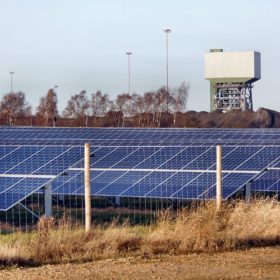
UK allocates 2.2 GW of solar at $0.055/kWh in CfD auction
Some 66 solar projects secured 15-year contracts-for-difference (CfDs) in a procurement exercise hailed a success despite undershooting its capacity targets.

The supply chain requirements UK solar developers will have to grapple with under CfD scheme
Any developers bidding to construct solar plants with more than 300 MW of generation capacity in the latest round of the UK’s clean power auction program will have to draw up a supply chain plan showing how they will address matters ranging from skills gaps to new technology to modern slavery.
UK considers reform of renewables subsidy regimes
A conference about the UK’s electricity market showed organizations are considering the future of the country’s energy sector and how to achieve a net zero economy.
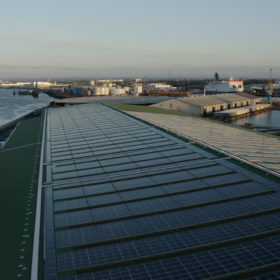
The future looks bright for UK solar
Last year’s figures marked the first time the market saw sustained, subsidy-free growth across residential, commercial and utility scale projects, according to trade body Solar Energy UK.

UK to move to annual renewables auctions from next year
With solar readmitted to the process for subsidizing new renewable energy generation capacity, the government says it is “hitting the accelerator” on clean power as it aims for a fully decarbonized electricity system by 2035.

European Commission approves €2.3bn renewables incentive plan by Greece
Competitive bidding for onshore solar and wind will establish a clean-power strike price acceptable to successful developers under the contracts-for-difference approach. The incentive scheme is also applicable to biogas, biomass, landfill gas, hydropower, concentrated solar power, and geothermal plants.

Financial incentive needed to drive UK energy storage
The lack of an incentive regime for battery projects and the like – whether a fixed feed-in tariff or market-driven contracts-for-difference program – is likely to see the COP26 host miss its 100%-clean-power-by-2035 commitment, according to K2 Management.
Fresh call for twice-yearly renewables auctions in the UK
A report published today states the British grid needs to become more flexible at a faster pace to stay on track for a net-zero 2050 and called for time-of-use electricity tariffs and for the government to stop dragging its heels on issues such as EV charging.
