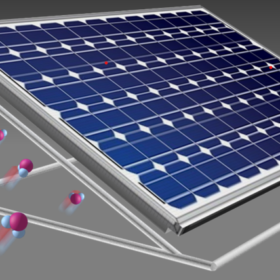
Harvesting atmospheric water to cool down PV panels
Scientists from Saudi Arabia have proposed a new PV panel cooling technique which employs an atmospheric water harvester. The device uses waste heat from the PV panel to collect atmospheric water at night and then releases it during the day to cool down the module. The researchers claim the device may also be improved to produce liquid water, which could be used for the cleaning of the modules.
A new technique for cooling solar panels
Scientists in Egypt have investigated the effectiveness of using water and a mixture of aluminum oxide and calcium chloride hexahydrate to cool PV modules. Optimal performance was observed with a solution of 75% water, according to the research findings.
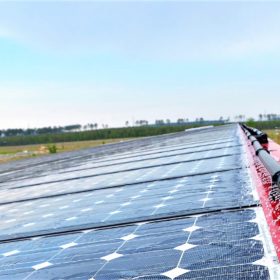
Cooling down PV panels with water
France’s Sunbooster has developed a technology to cool down solar modules when their ambient temperature exceeds 25 C. The solution features a set of pipes that spread a thin film of water onto the glass surface of the panels in rooftop PV systems and ground-mounted plants. The cooling systems collect the water from rainwater tanks and then recycle, filter and store it again. The company claims the technology can facilitate an annual increase in power generation of between 8% and 12%.

New material for radiative cooling of solar panels
Spanish researchers have discovered a material said to offer radiative cooling and self-cleaning of devices which undergo critical heating during operation, such as PV panels. The thermal emitter enabled the scientists to lower the daytime temperature of silicon wafers by 14 degrees Celsius.
