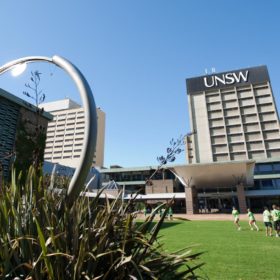
Heating up the heterojunction-LID discussion
Scientists led by the University of New South Wales have looked into the long-term degradation of silicon-heterojunction. Their findings suggest that illumination at high temperatures could actually improve cell efficiency, but also risks activating multiple light-induced degradation mechanisms if not carefully controlled.
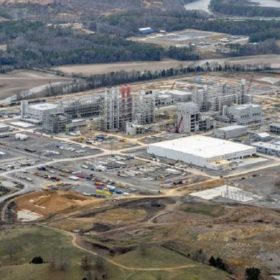
Four injured in ‘incident’ at Wacker’s US polysilicon factory
The German chemicals producer said that the issue involved four contractors doing maintenance on non-operational equipment.

Adding solar at airports
An Indo-Malay research group has sought to define the best conditions for developing large scale solar projects at airports. The researchers provided insight on glare analysis as well as design and performance.
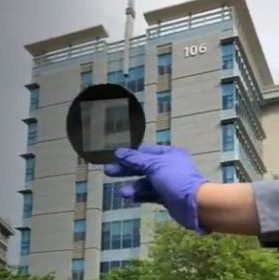
New transparent solar cell for window applications
South Korean scientists have transformed an opaque crystalline silicon solar cell into a transparent one by punching holes into it measuring around 100 μm in diameter. A neutral-colored, transparent c-Si substrate was used to develop the new cell, which is said to have an efficiency of up to 12.2%.
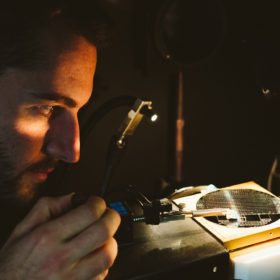
DuPont unit and Fraunhofer ISE to work on c-Si module testing
The PV solutions division of DuPont Electronics and Imaging has revealed plans to work with the Fraunhofer ISE on optimizing testing protocols for crystalline silicon solar modules.
VDMA: solar equipment orders increase 328% in Q1
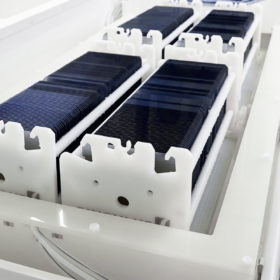
A report published by German engineering federation VDMA reveals strong demand for solar production equipment, with order intake in the first quarter of 2017 tripling over the previous quarter. The book to bill ratio of orders to delivered systems hit the ‘very high’ level of 4.4 for the first quarter of 2017
