
Belgian developer starts digging hole for geothermal heat pumps in Bruges
Property developer Steenoven and an undisclosed construction contractor have started drilling a borehole for a new thermal energy storage system in the historic city of Bruges, Belgium.
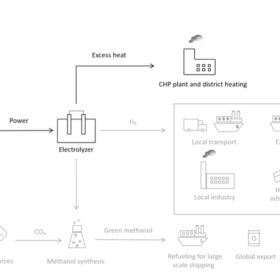
Waste heat from hydrogen production for district heating
The use of waste heat from hydrogen production in district heating could increase the attractiveness of green hydrogen, according to new research from Sweden.
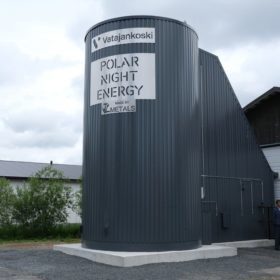
Sand-based system for seasonal storage comes online in Finland
The system will provide district heating to the city of Kankaanpää in western Finland. It has 100 kW of heating power and 8 MWh of energy capacity.

Storing solar power via borehole thermal energy storage
A Chinese-Finnish research group has proposed the use of seasonal, soil-based thermal energy storage in combination with photovoltaics in residential districts. They have found that the hybrid concept could cover up to 58% of total heating demand.
Fluid gas market situation casts shadow over EU energy system models
With each of the 10-year network development plans produced by Europe’s electricity transmission system operators years in the making, the latest such publication may already be out of date as the bloc prepares to fast forward its energy security and climate change ambitions.
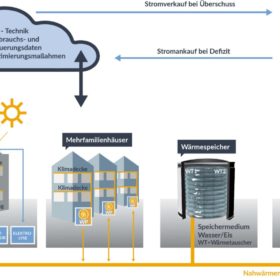
District heating via solar-powered heat pump using industrial waste heat
The Fraunhofer Institute for Solar Energy Systems is assessing how a solar-powered heat pump system that uses waste heat from a distillery at a low-temperature level could be used to provide district heating. Waste heat is injected into an ice storage tank, to which heat pumps are connected on the source side.
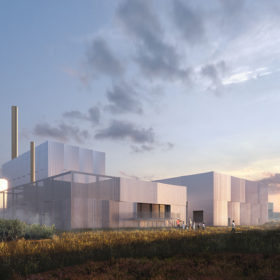
The world’s largest seawater heat pump based on CO2 as refrigerant
Swiss-headquartered technology corporation ABB is supplying integrated electrical infrastructure for the construction of a 50 MW seawater heat pump in Denmark. The heat pump technology will be provided by German specialist MAN Energy Solutions.
Heat pump control strategy for solar assisted district heating
Researchers in Spain have proposed two control strategies for the integration of heat pumps in district heating systems assisted by solar thermal collectors. Their technical-economic analysis shows that the proposed combination can reduce reliance on gas while also reducing costs.

Photovoltaics, heat pumps to rescue failed geothermal project in Poland
The Polish government is supporting a hybrid renewable energy project based on a deep-borehole heat exchanger (DBHE) whose heat pumps are powered by photovoltaics. The heat generated by the facility will be used for district heating.
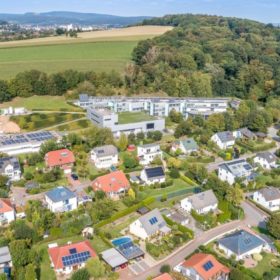
Pilot project to couple wind and solar with heat pumps in Germany
The Institute for Solar Energy Research Hamelin (ISFH) is testing if renewables can cover 80% of electricity and heating demand combined in some town districts in southern Germany.
