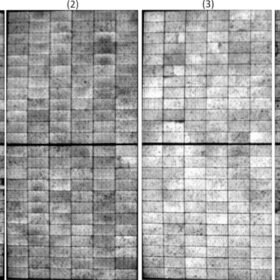
Self-powered electroluminescence for daylight PV system inspection
Scientists from Spain have developed a daylight electroluminescence method that uses other strings to supply current to the inspected string. It was simulated and then tested in two 50 MW PV plants. Comparative assessment against lab-electroluminescence resulted in acceptable diagnostic performance.
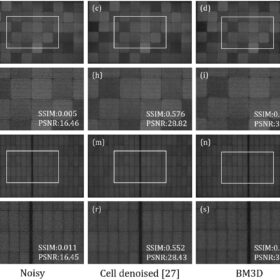
Denoising outdoor electroluminescence images of PV panels through deep learning
Researchers in Australia have developed a simplified residual network-based architecture method to filter out noise from electroluminescence images of PV modules. The proposed technique reportedly enhance the accuracy and efficiency of automated inspection systems for utility-scale PV plants.
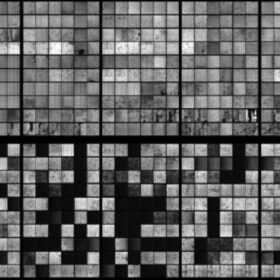
Nine-year EL testing on 85,000 PV modules shows increasing presence of edge ribbon cracks
A UK research team used electroluminescence imaging to inspect 167 PV installations comprising a total of 5 million solar cells. Defects were categorized into into line cracks, complex cracks, edge-ribbon cracks, and potential-Induced degradation (PID).

New deep learning tech uses electroluminescence images to identify defective PV cells
The novel method uses the YOLOv8 framework, integrating an attention mechanism and a transformer model. It was tested on a dataset of 4,500 electroluminescence images against several other models and its results were up to 17.2% more accurate.

PV module fault detection tech based on deep learning of electroluminescence
The novel technique is based on the VarifocalNet deep-learning object detection framework, which was reportedly tweaked to achieve quicker and more accurate results. Compared to other such methods, the new approach was found to be the most accurate and third quickest.

New methods for fault detection revealed at EU PVSEC
Quality control and problem detection and classification was brought into focus at the conference in Marseille. A packed house at a session focused on the latest fault detection techniques indicated the high level of interest in the field.
