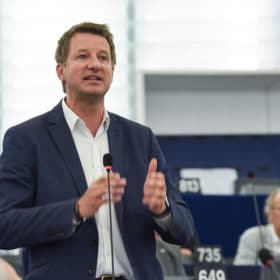
MEPs prepare to vote on EU carbon border
Carbon price levied on imported goods should be linked to level set by the bloc’s emissions trading system and should cover the power sector by 2023, according to members of the European Parliament’s environment committee.
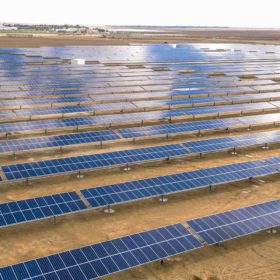
Five commercial offtakers for $33m Jordanian solar portfolio
Telecomms, retail and garment manufacturing businesses have signed up to consume the electricity to be generated by eight solar projects in Jordan which will harness grid infrastructure to transfer an estimated 81 GWh of clean power annually.
EIB finance for Burkina Faso solar plant
The European Investment Bank will lend more than half the cost of expanding the first solar project built by the West African nation’s electric utility, from 37 MW to 50 MW.
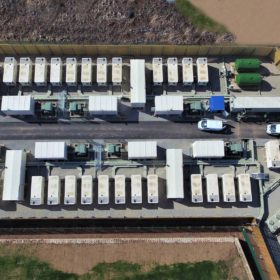
European Commission bids to ease planning of trans-border battery and hydrogen projects
The commission has proposed updating the law which regulates the bloc’s cross-border energy networks to include new energy storage technologies and smart grids as well as removing fossil fuel eligibility for public funding.
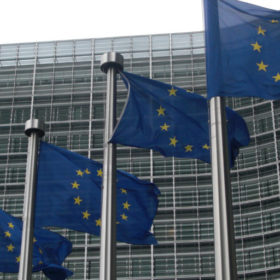
European Commission approves further €2.9bn battery research project
Companies from a dozen EU member states will commit the public funds in a bid to come up with novel battery chemistries and production methods as well as recycling and circular economy innovation.
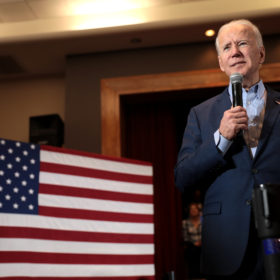
The world won’t wait – Biden needs to catch up
The inauguration of Joe Biden as the 46th President of the United States has brought hope the country will play a central role in the world’s energy transition and combating climate change. However, rather than teaching other countries lessons, the U.S. will need to catch up with the rest of the world, and it needs to do so quickly – the world won’t wait for the U.S.
Is China really opening its energy market to EU enterprises?
In an interview with pv magazine, Frank Haugwitz – the director of the Asia Europe Clean Energy (Solar) Advisory (AECEA) – explained how the recent China-EU investment deal could offer more opportunities to European companies in China’s renewable energy market. He said the agreement shall provide transparency over policies, regulations, financing, and subsidies. And competition shall grow, especially in the C&I solar segment, he added.

EU cash will fund solar lights for fishers
Pending final closing, the Electrification Financing Initiative has announced it is considering private equity investments of €1.5 million to two French firms operating in Benin, Togo, Burkina Faso and Senegal, and $1.5 million to a Tanzanian business operating in Tanzania and Uganda.

EU records annual rise of 7 TWh in third-quarter solar output
European renewables, including Spanish solar, made big gains as energy demand recovered before the second wave of Covid infections. Nuclear was a notable loser, in part because clean energy volumes in the north of the continent drove down power prices sufficiently to make reactors uncompetitive.
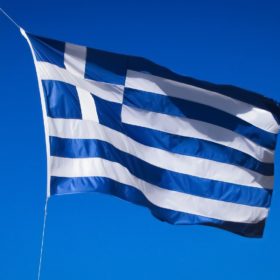
Greece plans 350 MW solar-wind tender in May and a further 2.1 GW to 2024
The national energy regulator has announced the country will host its third joint solar-wind tender and the energy ministry separately confirmed the procurement timetable will continue until 2024, auctioning an additional 2.1 GW of solar and wind power capacity via another six auctions.
