
Quadran International wins Seychelles tender for large-scale floating PV with bid of $0.095/kWh
The 4 MW plant will be deployed in Lagoon le Rocher on Mahé Island. Construction will likely begin in the second quarter of this year, while details of the 25-year power purchase agreement should be finalized by the end of March.
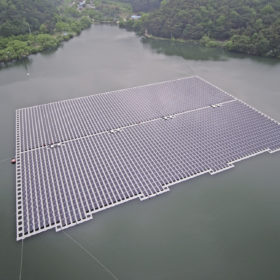
Vietnam to hold auctions for 400 MW of floating solar
Following its decision to switch from fixed feed-in tariffs to reverse auction bidding for the setting of solar incentives, the Vietnamese government has decided to devote the first two pilot auctions to floating PV. A first procurement exercise, for a project which could reach 100 MW of generation capacity, will be held this year.
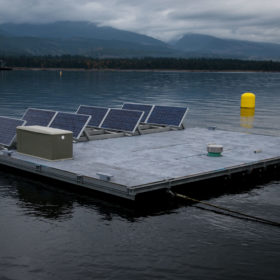
UK water company seeks solar power from large scale, rooftop and floating plants
Southern Water has issued a request for information about sourcing solar power through bilateral power purchase agreements. The company is considering buying electricity from generation facilities on its sites in southern England.
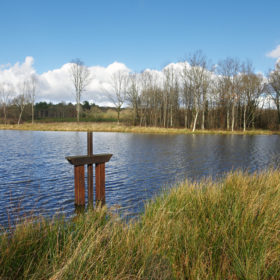
Aquavoltaic potential in Taiwan
Scientists have developed a new mathematical model which indicates floating solar on fish farms could be a lucrative option in land-scarce Taiwan. Although floating arrays could hinder fish production, the losses would be largely compensated by electricity-related income.
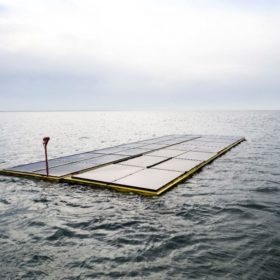
Offshore PV system goes online in North Sea
The 8.5 kW pilot project, which was launched in February 2018, will soon be expanded to 50 kW. The Dutch consortium behind the installation eventually plans to expand it to 1 MW and then up to 100 MW at a later stage. The Netherlands Enterprise Agency (RVO) provided financial backing for the project.
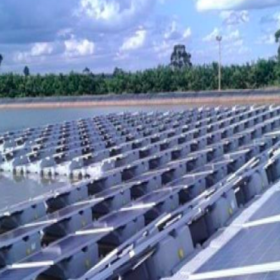
Asian Development Bank hails Bangladesh’s floating PV potential
A delegation from the Asian Development Bank recently paid a visit to the South Asian country to assess the prospects of floating PV in a nation that suffers from a general lack of land upon which to develop new renewable energy projects.
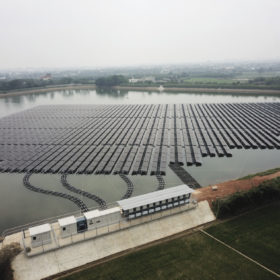
Tender for 50 MW of floating solar launched in Portugal
The Alqueva Dam on the Guadiana River, in southern Portugal, will host ten floating PV projects mostly financed by a €45 million Council of Europe Development Bank loan.
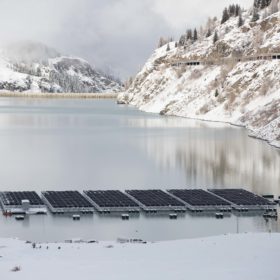
Floating in the Alps
Romande Energie is deploying a 448 kW floating array on the surface of Lac des Toules, a reservoir located at an altitude of 1,810 meters in the Swiss Alps. The installation will likely operate under heavy weather conditions, but it is also expected to produce 50% more power than similar projects built in the plain.
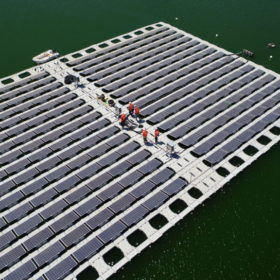
EU to help anchor lower price for floating solar power
The Fresher project, funded by the EU’s European Maritime and Fishery Fund, aims to develop better and cheaper mooring and anchoring systems for floating solar. The initiative is backed by Portugal utility EDP, which has recently begun to install floating projects.
Put your hands on a floating PV system
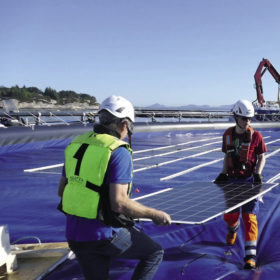
A new handbook published by the World Bank and Solar Research Institute of Singapore contains advice on how to plan and build floating PV. The guide is intended to help developers with site identification; feasibility studies; finance; environmental and social issues; procurement and construction; and operations and maintenance.
