Another giant solar project under development in France
French renewables developer Arkolia Energies is planning to build a 313 MW solar power project near Larzac, in southern France. The facility should be connected to a power-to-gas plant, but the project has already raised concerns among locals and environmentalist activists, which have started a petition on Avaaz to prevent its construction.
EDF finalizes purchase of French solar operator Luxel
The acquired company owns more than 1 GW of solar capacity, including operational large-scale plants and projects still under development. The financial terms of the deal remain undisclosed.

French regulator proposes tightening up controversial carbon footprint rules
In a report which states utility-scale PV project development in France can cost as little as €600 per installed kilowatt, the CRE has made recommendations including factoring in transport and full supply chain costs into the calculation of how environmentally friendly solar panels are.
France changes tender rules for innovative PV
After receiving approval from the European Commission in November, the French government has now published new rules for tenders assigning a fixed tariff to solar projects that use innovative technologies such as new cells and modules among others.

Lyon’s BePositive event shows confidence in French PV market remains strong
The solar event in Lyon illustrated how expectations of French solar remain big despite lower-than-expected development and issues related to regulations and carbon footprint requirements. The large participation of international and Chinese players seeking business among installers and distributors is a signal things may improve in the short term, and larger volumes may be deployed in the coming years.
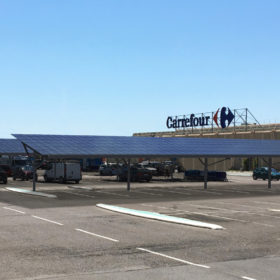
Carrefour deploys solar on 36 superstores in France
The French retailer will use energy generated by the PV installations exclusively for self-consumption. The projects will be developed by French developer Urbasolar.

France to tender 17.2 GW of solar up to 2025
In France’s new energy strategy, the Macron administration has said how much will be allocated annually in tenders for ground-mount and rooftop PV projects over the next six years. In the best case scenario, France would have 44.5 GW of solar capacity by 2028, with renewables forecast to come in at up to 113 GW.
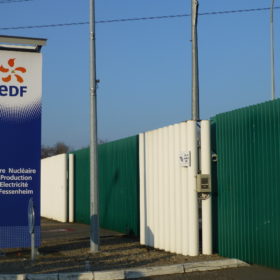
Solar tender for French nuclear site is published
Only four days after receiving approval from the European Commission, the French government has issued the tender for 200 MW of ground-mounted solar and a further 100 MW of rooftops at Fessenheim. The government is considering raising a 30 MW size limit for PV projects on degraded land.
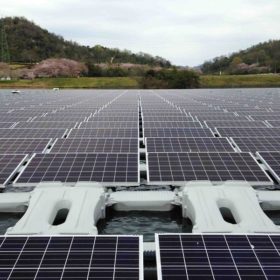
EU approves France’s €600 million scheme to support innovative PV
Through the program, the French government is supporting projects ranging in size from 100 kW to 5 MW. Tenders, to award 20-year FIT contracts for projects, will be held by the end of 2019.
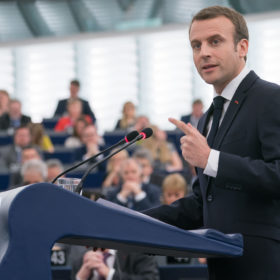
Macron delays reduction of nuclear share by a decade, but announces 45 GW solar target by 2030
Although the French President promised that solar capacity will increase fivefold by 2030, France’s new energy strategy will keep nuclear power at the core of its electricity system. The decommissioning of approximately 20% of France’s nuclear power generation assets, originally set by the country’s energy transition law for 2025, has been delayed to 2035. Macron said this plan may be reconsidered, however, if storage technologies help mitigate intermittence issues and if there can be stronger European integration.
