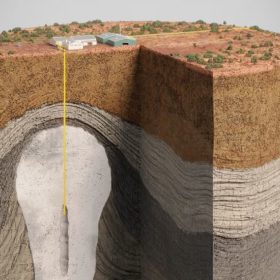
Underground caverns to help unlock Australia’s hydrogen industry
Australia’s ambitions to become a major player in global green hydrogen production have received a boost with a new report from Geoscience Australia confirming the potential for large-scale, underground storage of hydrogen in salt caverns across the country.
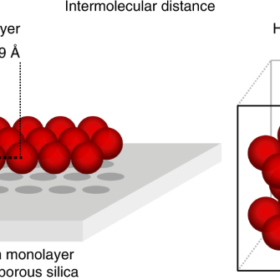
The Hydrogen Stream: Condensed hydrogen on smooth surfaces can sharply exceed liquid hydrogen density
A German-US research team has shown that hydrogen condenses on smooth surfaces at a very low temperature, forming a super-dense monolayer that reduces the volume to just 5 liters per kilogram of H2. Dutch researchers, meanwhile, have published a new study on hydrogen storage in porous rocks, and Itochu said it is moving forward with hydrogen plans in Japan and South Africa.
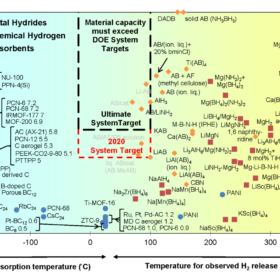
Solid-state hydrogen storage techniques at a glance
Scientists compared hydrogen storage techniques and found that physical methods are closer to commercial feasibility, while materials-based techniques have strong potential.
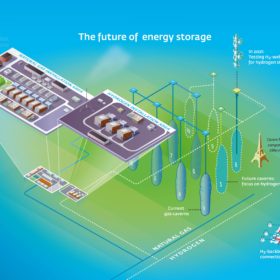
The Hydrogen Stream: Bilfinger, Gasunie to commission first hydrogen deep underground storage in 2026
Gasunie will establish a total storage capacity of approximately 26 million kilograms of hydrogen, with the first storage facility to be operational by 2026. Porsche Engineering has revealed its findings on the potential of hydrogen combustion engines, while hydrogen plans advanced in Australia and Portugal.
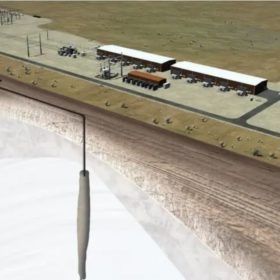
World’s largest underground hydrogen storage project
Mitsubishi Power Americas and Magnum Development are set to begin construction on a 300 GWh underground storage facility in the US state of Utah. It will consist of two caverns with capacities of 150 GWh, to store hydrogen generated by an adjacent 840 MW hydrogen-capable gas turbine combined cycle power plant.
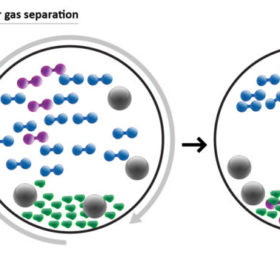
Novel mechanochemical breakthrough for hydrogen storage
Researchers at Deakin University in Australia have discovered a novel way to separate, store and transport large amounts of gas without waste.
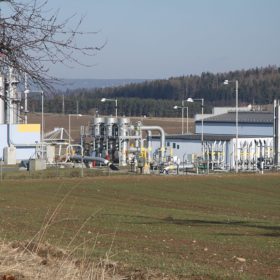
Oil and gas reservoirs are cheapest options for underground hydrogen storage
New research from Ireland shows that depleted oil and gas reservoirs may be used to store hydrogen at a cost of $1.29/kg. According to the researchers, underground hydrogen storage may benefit from the technological maturity of the geologic storage of natural gas and CO2, which are associated with decades of established knowledge.
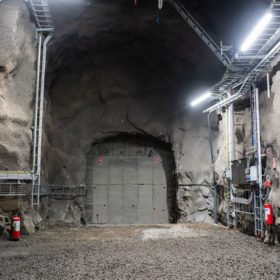
Swedish consortium completes rock cavern for green hydrogen storage
Vattenfall and its partners have finished building a 100-cubic-meter underground facility to store green hydrogen.
The real value of energy storage
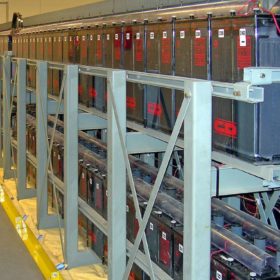
An international research team has developed a new way to evaluate the economic value of energy storage technologies. They went beyond pure cost assumptions to consider the benefits that such technologies could bring to energy systems.
Sweden’s first rock cavern for green hydrogen storage takes shape
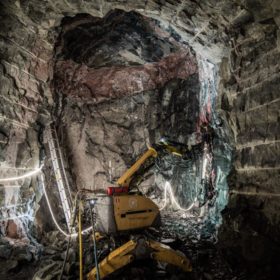
Vattenfall, SSAB and LKAB have reached the halfway point in the construction of a rock cavern storage facility in a coastal city in northern Sweden. The 100-cubic-meter facility is being constructed 30 meters below ground and will begin storing green hydrogen next year.
