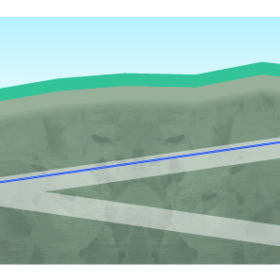
Work begins on green hydrogen storage cavern in Sweden
Vattenfall, SSAB and LKAB are building a rock cavern storage facility in a coastal city in northern Sweden. The 100-cubic-meter facility will be built 30 meters below ground and will begin storing green hydrogen next year.

Work begins on underground hydrogen storage project in Germany
German energy provider EWE wants to set up a test cavern with a capacity of 500 cubic meters at a depth of 1,000 meters. It is scheduled to go into operation in spring 2022.
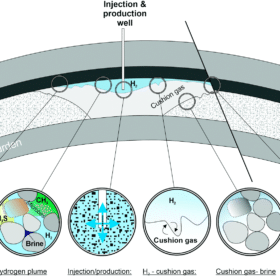
Key challenges for underground hydrogen storage
An international research team has presented challenges and knowledge gaps in the implementation of large scale underground storage of hydrogen. The main issues associated with this technology relate to the fluid flow behavior of hydrogen in subsurface reservoirs, geochemical reactions caused by hydrogen injection, biotic reactions caused by excess hydrogen, and the geomechanical response of the subsurface to hydrogen storage.
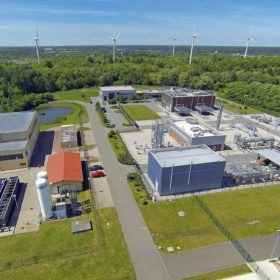
German gas provider builds cavern for hydrogen storage
The hydrogen storage cavern will be built near Berlin at a depth of around 1,000 meters and measuring 500 cubic meters. It is scheduled to go into operation in spring 2022.

Underground hydrogen storage in Canada
A new study has assessed the geological feasibility of large-scale seasonal underground hydrogen storage in Canada and has found that the Western Canada Sedimentary Basin and southern Ontario are the most suitable areas for the technology.

Hydrogen storage in salt caverns in France
Hydrogène de France and gas grid company Teréga plan to launch a feasibility study for a 1.5 GWh pilot hydrogen storage project in caverns in the southwest of the country.
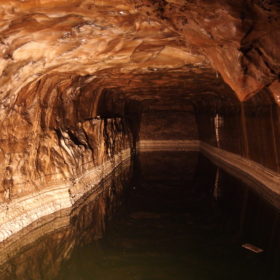
Hydrogen storage in salt caverns
Researchers in Germany have identified salt caverns as a feasible and flexible solution for hydrogen storage. They also revealed that Europe has the potential to inject hydrogen in bedded salt deposits and salt domes, with a total storage capacity of 84.8 PWh.
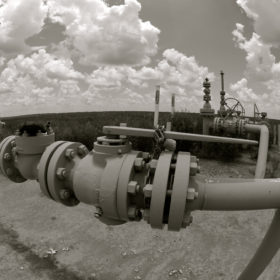
Trans-Pacific partnership aims to accelerate green hydrogen uptake
Australia’s national science agency CSIRO and Canada’s University of British Columbia have announced a memorandum of understanding aimed at accelerating clean hydrogen technologies.
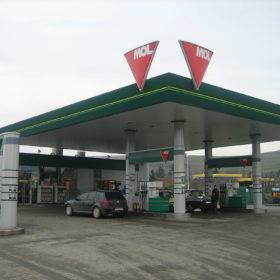
Hungarian oil and gas provider MOL enters the hydrogen business
The fossil fuel company will partner with Slovakia’s InoBat to develop hydrogen-related projects in central and eastern Europe. Sourcing and supply of hydrogen will be the main focus of the cooperation.
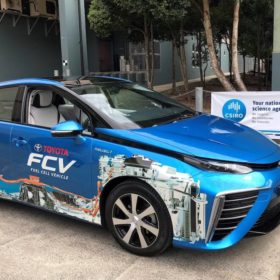
Hydrogen home storage, refueling hub get financial shot into the arm
Toyota Australia will transform its former manufacturing site in West Melbourne into a renewable energy hub to produce green hydrogen with the help of funding from the Australian Renewable Energy Agency (ARENA). In other hydrogen-related news, researchers at UNSW Sydney with partners H2Store have received a $3.5 million investment from Providence Asset Group to develop a hydrogen residential storage.
