
Yingli Green Energy forms special committee for resolution of debt issues
Chinese tier-1 solar manufacturer Yingli Green Energy today announced the formation of a committee of independent directors to assess the company’s situation. The committee will recommend strategic improvements and alternatives, in order to improve Yingli’s debt structure.

Tesla to finally close the door on Silevo
It’s been a long time coming, but Tesla’s annual report confirms that the SolarCity-Silevo romance has come to an end

pv magazine Technology Highlights: Jury announcement
pv magazine is very pleased to announce the six-member jury that will meet to decide this year’s Technology Highlights feature and award. The award recognizes excellence in PV production materials and equipment supply.

Enel Green Power converts Italian module factory to production of bi-facial, heterojunction technology
Italy’s ENEL will invest €80 million ($84.4 million) to convert its PV module manufacturing facility, in southern Italy, from amorphous silicon to bi-facial heterojunction modules. ENEL expects to launch its new modules in 2018 and to reach a capacity of 240 MW in 2019.

SolarWorld Americas appreciates Trump’s tough trade talk
The panel manufacturer, which operates a production facility in Oregon hopes the president’s call for strict enforcement of U.S. trade laws will give it, as well as other domestic panel companies, a better chance against Chinese competition.

Chint signs framework agreement to build solar factory in Brazil
The Chinese module maker has signed an agreement to set up a solar module manufacturing facility in Brazil. The local government hopes the new factory will attract more investments.

Meyer Burger to shut-down U.S. diamond wire production
The Swiss equipment provider has announced a plan to close production for its diamond wire platform in Colorado. The company blames global pressure on prices and margins. Meanwhile, its preliminary financial results for 2016 show a 40% increase in sales.
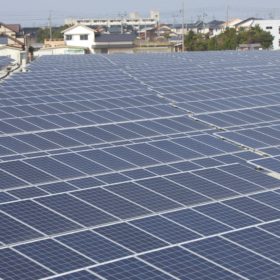
REC Solar module shipments for 2016 exceed 1.2 GW
The Norwegian solar manufacturer saw its module shipments increase 9% year-on-year to 1,266 GW in 2016. A strong fourth quarter was the main driver for this performance. Americas accounted for about 53% of the company’s shipments last year, while in the EMEA and APAC markets REC Solar sold 32% and 15% of its products, respectively.
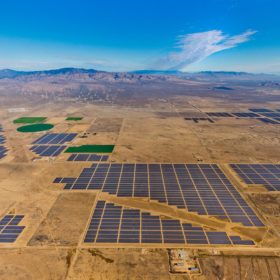
The pv magazine weekly digest
Solar stats from around the world have been rolling into the pv magazine office this week, as analysts continue to predict big things for solar in 2017. Amid these expectations the industry continues to innovate and grow as a major part of the world’s energy supply.
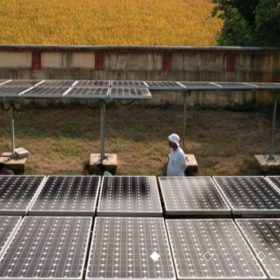
Tata Power Solar reaches 1 GW module shipment milestone
The solar arm of the industrial giant becomes the first Indian company to surpass 1 GW of global PV module shipments, shipping 60% of that figure over the past five years.
