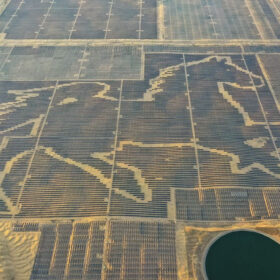
Weekend Read: Famine to feast – China’s solar market in 2023
China’s solar industry rebounded in 2023 after years of pandemic-related sluggishness. As the year draws to a close, pv magazine looks back at key highlights of 2023 and considers the prospects for 2024.
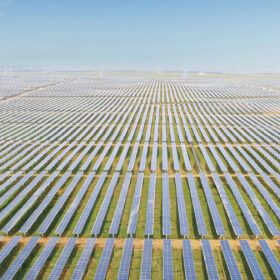
Solar dawn
Frank Haugwitz arrived in China in June 2002 as technical adviser to the solar-focused Sino-German Renewable Energies in Rural Areas Program. He has directly observed the nation’s rise to solar superpower status.

Weekend Read: China’s solar century
From zero to hero in 20 years, China’s PV industry has undergone an extraordinary journey. Vincent Shaw considers the reasons for the nation’s solar success and the challenges ahead.

EVA the next supply chain pinch point for solar
With polysilicon production capacity having been rapidly rolled out after last year’s shortages, China analyst Frank Haugwitz has suggested global manufacturing capability for the ethylene vinyl acetate used on PV panels could struggle to keep pace with what is expected to be another record year of demand for solar.
Will China’s ‘double carbon’ and ‘dual control’ policies drive demand for solar?
Factories suffering from rationed grid electricity could help drive a boom in on-site solar systems, and recent moves to mandate the retrofitting of PV on existing buildings could also lift the market, as analyst Frank Haugwitz explains.
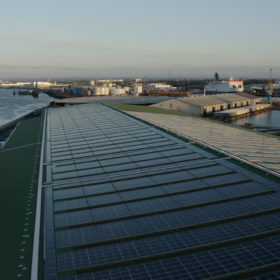
China set to mandate solar on at least 20% of residential roofs in pilot counties
State body the NEA has given its provincial offices until July 15th to suggest counties where a solar mandate – which rises to at least half of all government roofspace – can be rolled out. Selected companies will be awarded whole-county contracts.

Has China extended solar grid-connection deadlines by a year?
Such a decision, which industry body the CPIA is adamant has already been announced, could make all the difference to investors struggling with a surge in equipment costs fueled by the polysilicon shortage. The all-important National Energy Administration, however, has yet to confirm whether the CPIA’s interpretation is correct.
China mandates energy storage as it sets 16.5% solar and wind target for 2025
The National Energy Administration has ordered grid companies to supply enough network connection points for all the solar and wind projects registered in 2019 and 2020, and said variable renewables should be supplying 11% of the nation’s electricity by the end of the year.
Beijing: China installed 48.2 GW of solar in 2020
With the nation almost doubling its new generation capacity figure for the year last month, the National Energy Administration is reportedly considering a joint solar and wind capacity target of 120 GW for this year.

Consultant plays down Chinese solar fever
The nation is set to have added 40 GW of solar in 2020 and that figure will rise again this year, to 45-50 GW, according to one of the year’s first industry predictions.
