
British capacity market row continues over £1 billion payment insecurities
The bickering around the British Capacity Market is not over yet. The European Commission has closed its formal investigation into the market mechanism’s alleged violation of EU State Aid rules, finding no violations of that kind. But footing the bill for the year-long suspension of the scheme might prove complicated.
UK energy company loses license over unpaid renewables obligations
URE Energy repeatedly missed deadlines to settle a £209,000 bill after it failed to source enough of the electricity it supplied two years ago from renewable generation.

IEEFA joins calls for policy clarity about UK’s net zero ambition
An energy finance consultant from the international thinktank has added his voice to demands Theresa May, or her successor, spell out exactly how the decarbonization target will be met, and cited failings on solar as a warning on how not to proceed.

UK solar: Records, concerns and a persistent regulator
Although the nation’s PV industry has recently established new landmarks, warnings have been sounded about the immediate outlook for the sector.
16 MW of UK solar could be ‘ghosted’ over deployment cap
Regulator Ofgem has said that 10 MW of small-scale solar projects have breached the deployment cap, leaving stakeholders uncertain about feed-in tariff payments. A failure to collect FITS could spell disaster for investors, says the U.K.’s Renewable Energy Association.

UK removes ‘key barrier’ to installation of household battery storage
The government regulator for gas and electricity markets in the United Kingdom has released updated guidance clearing up the confusion surrounding the installation of storage at households exporting solar to the grid. More still needs to be done though, argues the Solar Trade Association.
UK: Ofgem proposal means ‘the most profligate energy users will be rewarded’, says STA
Power market regulator favors a flat rate fee for electricity consumers to fund the cost of making the U.K. grid fit for the energy transition. Solar lobbyists say that will unfairly penalize households and businesses who have invested in on-site generation.
UK regulator reveals power companies owe almost £63m to renewable energy obligation pots
Four electricity suppliers have been named by Ofgem for missing payment deadlines for penalties prompted by their failure to meet renewable energy buying obligations. A separate fund for small-scale generators, paid for by energy suppliers, also has a financial shortfall.

Centrica to join London blockchain trial for alternative billing
Using a blockchain-based energy trading system, the company seeks to examine ways to bill customers in the best manner for them and prosumers. In light of the potential removal of export tariffs for small scale solar in the UK, the system could provide alternative remuneration for system owners. The trial will run for six months, with the possibility of extending it to two years.
European Court of Justice censors European Commission approval of UK capacity market
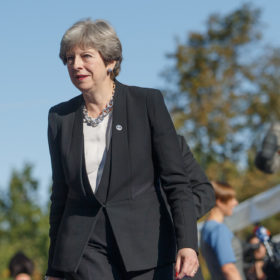
With Theresa May’s government in full scale revolt this week over Brexit, the ECJ’s ruling that the European Commission wrongly failed to find fault with the UK capacity market mechanism four years ago, is likely to have Brexiteers on both sides of parliament frothing at the mouth with indignation.
