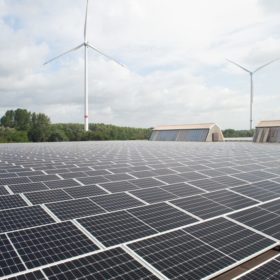
Belgium’s largest PV rooftop commissioned by ArcelorMittal
The €7.5 million project, built by Dutch energy provider Eneco, is intended to power operations at the Ghent factory of the Indian steel manufacturer. Arcelor’s employees were invited to participate through crowdfunding.

French postal service aims to deliver stable energy bill using renewables
The La Poste Group wants one or more green corporate PPAs, to be procured through a tender. The postal service wants to hedge against volatile energy prices.
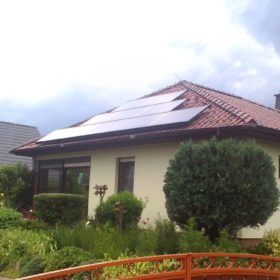
Poland slashes VAT for residential solar from 23% to 8%
The Polish parliament has adopted new environmental provisions which also include a tax reduction for micro PV. The measure comes on top of the Mój Prąd rebate scheme for residential rooftop projects ranging in size from 2 kW to 10 kW which was launched in July.
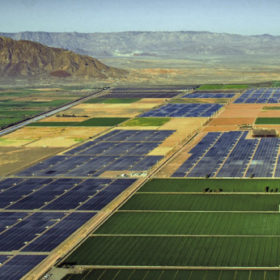
The US tops 37.9 GW of large scale solar
That record figure of utility scale PV was under contract at the end of June with 8.7 GWdc under construction. However, installation levels fell slightly, year-over-year.

An organic solar cell for indoor light
A Swedish-Chinese research team has developed an organic cell said to be ideal for wide use in daily life to power internet of things-enabled devices. The cell could be used to power sensors that detect and measure moisture, particle concentrations, temperature and other parameters indoors.
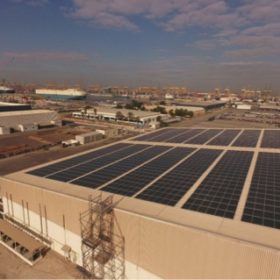
Dubai has 106 MW under net metering
Most of the generation capacity – around 63 MW – was deployed in the emirate over the last 14 months.
Total expands solar business in Asia
The French oil giant and China’s Envision Group are forming a joint venture offering PV systems combined with energy management solutions. Total Eren is also involved in a 100 MW solar project in Uzbekistan.

Colombia imposes renewables quota on power distributors
The obligation will be applied annually from 2022. The clean electricity required will have to be bought through power purchase contracts of at least 10 years’ duration.
Dutch government seeks to privatize Tennet
Tennet needs more than €4.75 billion to invest in cross-border grid infrastructure between Germany and the Netherlands, as rising volumes of solar and wind are complicating network operations, said Dutch Finance Minister Wopke Hoekstra in a recent letter to the Dutch parliament, adding that the government may need to privatize the state-owned transmission system operator or sell off a stake in it.
Solar-plus-storage vs. grid enhancement, part III
A new IRENA report highlights how large-scale storage systems can be thought of as “virtual power lines” that enhance the performance and reliability of power networks when congestion occurs. It expects global storage capacity from large-scale batteries to grow from about 11 GWh at present to between 100 GWh and 167 GWh by 2030.
